- +255 697 034 034
- info@wildandnaturesafaris.com
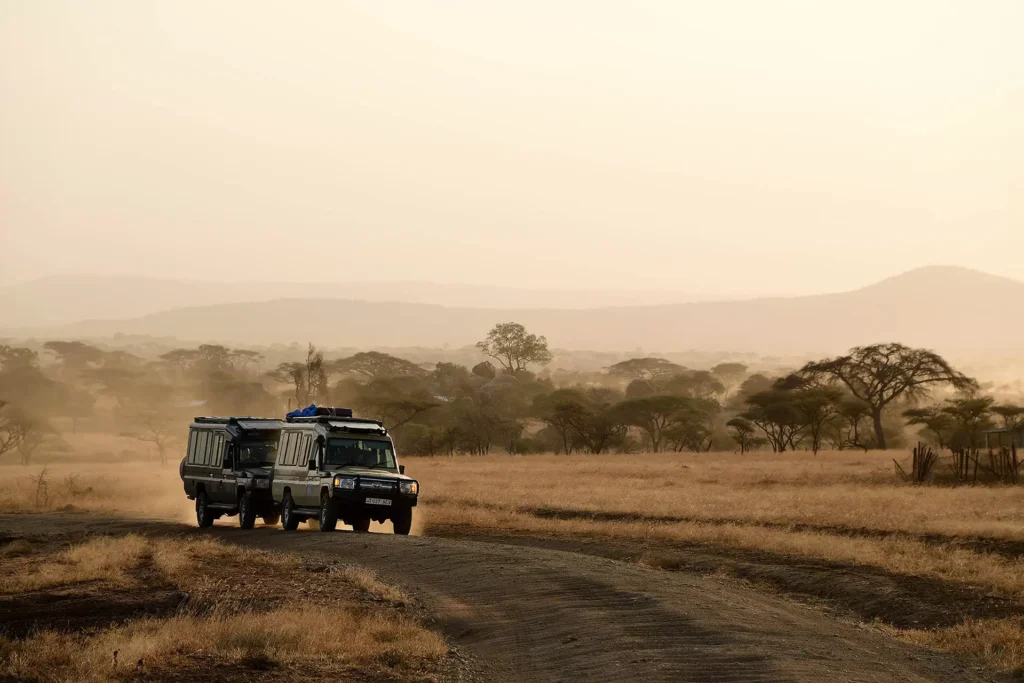
Discover the iconic Serengeti National Park, Tanzania
Serengeti National Park in northern Tanzania is one of Africa’s most iconic and biologically diverse wildlife sanctuaries. Encompassing approximately 14,763 square kilometers (5,700 sq mi), it is a UNESCO World Heritage Site together with the Ngorongoro Conservation Area and Mount Kilimanjaro and the centerpiece of a larger ecosystem that extends into Kenya’s Masai Mara, the Serengeti offers an unmatched wildlife viewing experience. This vast park is home to the famous Big Five: elephants, lions, buffaloes, rhinoceroses, and leopards, as well as many other animals including giraffes, hippos, and crocodiles. It’s also where the Great Migration of wildebeests and zebras takes place. With over 70 species of large mammals and 500 birds, the Serengeti is a must-visit wildlife area.
Where is the Serengeti National Park located?
Is Serengeti in Kenya or Tanzania? – This question is often raised by travelers who plan to visit East Africa. The answer is simple: the Serengeti National Park is located in northern Tanzania, stretching over 1,500,000 hectares (3,700,000 acres) of wild savanna. It can be easily found on the map – to the east of Lake Victoria, the largest lake in Africa, near the border with Kenya.
To the north, the Serengeti borders the Kenyan Maasai Mara National Reserve, and to the east, the renowned Ngorongoro Crater and Conservation Area. The larger Serengeti ecosystem stretches even beyond the national park, being defined by the area covered by the Great Migration.
What is the best month to visit the Serengeti?
Serengeti in January
Dry season
By mid-January, the short rainy season ends, and the weather is clear and hot. Giraffes, elephants, buffaloes, and other herbivores enjoy the thick juicy grass, while predators rest in the shade of acacias. In the south-eastern Serengeti, a new cycle of the Great Migration begins: large herds of wildebeest, zebras, and gazelles start moving south across the Serengeti plains in search of fresh pastures.
This is one of the most popular months for safaris, and the park will have many other visitors.
Serengeti in February
Dry season
February is the hottest and driest month in Tanzania. The sky is almost always clear, the grass in the savanna dries up, and even small animals – mongooses, serval cats, and dwarf antelopes dik-diks – are easily seen from the safari SUV. Elephants, giraffes, buffaloes, and other large mammals tend to stay closer to the rivers.
During this month, the giant herds of the Great Migration rest in the southern plains of the national park. At this time, wildebeests and zebras give birth to their young, with up to 8000 babies born each day.
Travelers in the park are still numerous, but towards the end of the month, the number of safari vehicles gradually decreases.
Serengeti in March
Shoulder season
March is a warm transitional month between the dry and rainy seasons. Starting from mid-March, there are noticeably fewer other safari vehicles in the park, and many Serengeti lodges begin to offer seasonal discounts. This month is well-suited for travelers who prefer a secluded and peaceful vacation.
Large mammals – elephants, giraffes, buffaloes, lions, leopards, and antelopes – can often be seen both near water bodies and just along the road. Animals have become accustomed to safari vehicles and allow you to take a closer look at them.
Serengeti in April
Rainy season
In April, rains are common, yet there are days when it’s completely dry. Animals in the Serengeti can be encountered in any part of the park: the rains create new waterholes, eliminating the need to stay near rivers. Fresh grass grows, transforming the park’s grassland plains from drought-yellow to lush green. Against this backdrop, giraffes, lions, and leopards look particularly picturesque.
At the same time, smaller cats like servals and caracals can be difficult to spot in the dense and tall grass. They are more visible during the dry season in July-September and January-March when the savanna grass is not so tall.
Seeking fresh grass, large herds of antelopes and zebras move from the southern Serengeti to the western part of the park.
April sees the fewest travelers in the Serengeti, and hotels offer the most advantageous seasonal deals.
Serengeti in May
Rainy season
The Serengeti continues to experience seasonal rains in May. The savanna is drowning in greenery, and large herbivores – elephants, giraffes, buffaloes, and gazelles – disperse across the entire territory of the park. Lions, cheetahs, leopards, and other predators can also be seen in any part of the Serengeti. Large herds of zebras and wildebeest can be found in the western part of the park. Lake Victoria, the largest in Africa, is just a few dozen kilometers to the west.
There are occasionally completely dry days in May, but we recommend being prepared for any weather. Be sure to bring windproof jackets.
Like in April, there are relatively few travelers in the Serengeti in May, and hotels offer seasonal discounts.
Serengeti in June
Shoulder season
By mid-June, dry weather returns to the Serengeti. The rains end, and the Southern Hemisphere enters the equatorial winter: it becomes slightly cooler than in January and February. The savanna enjoys comfortable, not-too-hot weather, and the park is not yet crowded with visitors. Early in the month, there’s still a chance to take advantage of seasonal discounts at hotels. This is the ideal time for a safari.
Large savanna inhabitants – elephants, giraffes, buffaloes, lions, and other felines – can be seen in any part of the park. They often approach closely to the safari vehicles, allowing for closer observation.
Large herds of wildebeest and zebras begin their mass crossing through the Mbalageti and Grumeti rivers. They often encounter predators – lions, leopards, hyenas, and crocodiles along the way. This is one of the most iconic and memorable sights on a safari.
Serengeti in July
Dry season
July is the coldest month in the Serengeti National Park, with nighttime temperatures possibly dropping to +14°C (57°F). During the day, it’s usually warm and sunny, around 25-30°C (77-86°F). By this time, the rains have already ended, and the park again fills with travelers.
Giraffes, elephants, zebras, and antelopes try to stay closer to water sources, where you’ll also see hippos and crocodiles. The savanna’s predators – lions, leopards, caracals, and servals – hunt in various parts of the park. They are not at all afraid of safari vehicles, and a pride of lions can often be seen right by the road.
Large herds of wildebeest, zebras, and other ungulates begin their crossing of the Mara River in the northern Serengeti. This is the climax of the Great Migration: obeying instincts, thousands of animals simultaneously swim across the full-flowing Mara River against the backdrop of the African savanna. This epic wildlife drama can only be seen in the Serengeti.
Serengeti in August
Dry season
August — the peak of the summer “dry” season in the Serengeti National Park. The occurrence of rain is rare, leaving the sky mostly clear. Nights can be cool, with temperatures potentially dropping to 14-15°C (57-59°F). During this period, the park typically sees its highest number of visitors.
The savanna’s inhabitants are virtually everywhere, offering an excellent opportunity for wildlife viewing. From the comfort of an SUV, one can spot lions, elephants, giraffes, antelopes, buffaloes, mongooses, warthogs, and other animals. August is an optimal time to observe animals like servals, caracals, and mongooses, which are more difficult to spot during the rainy season due to the high grass.
Large herds of wildebeest, zebras, and other ungulates gather in the northern part of the park, where the climax of the Great Migration, crossing the Mara River, continues. July and August are considered the best months to witness this unique natural spectacle, as massive herds make their way across the river, while hungry predators lurk in the waters.
Serengeti in September
Dry season
In September, the Serengeti National Park enjoys warm and clear weather. This is a popular time for safaris, and the park will still have many other travelers.
By September, the Serengeti savanna dries up, and animals tend to stay closer to water bodies. Here you can most often encounter large herbivores: elephants, giraffes, buffaloes, zebras, and antelopes. Predators — lions, leopards, and spotted hyenas — are almost always nearby. On a safari in the Serengeti, you are sure to see all the main African animals against the stunning landscapes of the savanna.
Serengeti in October
Dry season
October is the last dry month before the onset of the rainy season, making it an excellent time for a safari in the Serengeti National Park. Most of the time, the park enjoys pleasant dry, and warm weather, and there are fewer travelers than in August or September.
Animals in the Serengeti are everywhere. On a safari, you are very likely to see famous African predators: lions, leopards, hyenas, and cheetahs. They can be encountered in any part of the park. The Serengeti also hosts all types of large herbivores: elephants, buffaloes, zebras, antelopes, and giraffes. You’ll also come across some less-known but interesting savanna inhabitants, such as caracals, servals, Thompson’s gazelles, and monkeys.
Large herds of wildebeest, zebras, and other ungulates return to the Serengeti from Kenya and again cross the Mara River in the park’s northern part.
Serengeti in November
Rainy Season
November marks the beginning of the rainy season in Tanzania. The park sees significantly fewer visitors, and lodges offer seasonal discounts. We recommend this time for a safari to those who want to enjoy Africa’s most famous national park in a more secluded manner.
Due to the rains, the Serengeti plains change their coloration: from drought-yellow to vibrant green. Numerous water sources emerge, and animals spread out across the park’s expanse. Small savanna dwellers such as dik-dik antelopes, mongooses, and servals can be difficult to spot due to the tall grass. Large mammals like elephants, giraffes, buffaloes, and zebras are easily found throughout the park. In the Serengeti rivers and lakes, visitors will see hippos and crocodiles.
The large herds of wildebeest, zebras, and other ungulates return to the western part of the park, where fresh grass is abundant.
Serengeti in December
Shoulder season
By mid-December, the autumn rainy period concludes, and the Serengeti welcomes an influx of tourists for the holiday season, marking the start of the winter safari season. The weather is dry and sunny, noticeably warmer than in July through September.
The park’s popular African animals — elephants, zebras, giraffes, buffaloes, lions, leopards, and hyenas — can be encountered throughout the Serengeti. During a safari, visitors will also see servals, warthogs, Thompson’s gazelles, caracals, servals, hyenas, crocodiles, hippos, and other wildlife.
What are the main attractions of the Serengeti National Park?
The Serengeti National Park, Tanzania, is one of the largest safari parks in Africa. To visit the main locations, travelers need 3-4 days. Here are the key places one needs to visit to get to know Serengeti:
Central Serengeti and the Seronera River Valley
This is the most popular place in the Serengeti. Here, you can see practically all the animals, and it is also where most safari lodges are located. Almost all multi-day safaris in the Serengeti start in its central part.
Western Corridor and Grumeti
The western part of the park is an open savanna. Here you can also see all the iconic African animals: lions, zebras, elephants, buffaloes, antelopes, and many others. The Grumeti and Mbalageti rivers are home to hippos and crocodiles.
Northern Serengeti: Kogatende, Lobo, and Lamai
The final stage of the Great Wildebeest Migration happens in the northern part of the Serengeti when large herds of wildebeest, zebras, and gazelles cross the wide Mara River. This area is very picturesque and a must-visit during a safari.
Activities in the Serengeti National Park
A classic safari in the park can be enhanced with unique experiences in the savanna. Travelers visiting the Serengeti can enjoy the following additions to their safari tour:
Hot air balloon safari
Drone use is prohibited in the Serengeti, making hot air balloon flights the only way to view the savanna from a bird’s eye perspective. The view from above offers especially picturesque scenery and the opportunity for stunning panoramic photographs. The endless plains of the Serengeti inspired Disney’s ‘The Lion King’, and they are especially impressive from above.
Breakfast and dinner in the savanna
Most lodges in the park can arrange breakfast or dinner right under the open sky in the Serengeti, allowing travelers to enjoy fine dining in one of the most scenic spots on the planet, accompanied by the sounds of the savanna.
Animals in Serengeti National Park
The Serengeti is home to more than seventy species of large mammals, making it the best place on the continent to see all the famous African animals. The populations of many species here are significantly higher than in other well-known national parks. The Serengeti is also one of the few places where you can spot Africa’s rarest animal – the Eastern black rhinoceros.
Weather on Mount Kilimanjaro changes quickly and depends on altitude.
Lower slopes: warm and humid
Mid zones: cool and windy
Summit night: very cold (–10°C to –20°C)
You should expect:
Cold mornings and nights
Strong winds near the summit
Possible rain in the rainforest zone
Proper clothing and layering are essential for comfort and safety.
How much does Serengeti Safari cost?
The cost of a vacation in the Serengeti depends on many factors, including the season, choice of accommodation, length of stay, and so on. The national park charges entry fees, which are typically included in the cost of safari packages.
A mid-range safari in the Serengeti with a reliable tour operator typically costs between USD $400 and $600 per person per day. However, there is no upper limit for luxury safaris, as some exclusive lodges can charge thousands of dollars per night.
History of the Serengeti National Park
Before the arrival of Europeans in Africa, little was known about the grassland plains of the Serengeti. The region that is now the national park was inhabited by various African tribes. The first recorded observations of the region were made by Austrian explorer Oscar Bauman, who visited in 1892.
The history of the Serengeti as a protected area began in 1913, when German colonial authorities declared the ecosystem a game reserve, significantly restricting hunting. After World War I, Tanganyika came under British mandate. In 1923, the British government expanded the game reserve, and in 1951, the Serengeti was declared a national park. With this status, any human activity – construction, hunting, logging, etc. – within the park became illegal. The Maasai tribes living in the park were forcibly relocated outside the Serengeti. Today, only photo tourism and the construction of hotels in designated areas are permitted.
EXCELLENTVerified Everything was well organized Everything was well organized from pick up to the game drives, I have never felt alone. I truly enjoyed every moment, thank you Wild and Nature Safaris.Posted onVerified Extraordinary Extraordinary safari experience in Tanzania.Our 5 days safari experience in Tanzania, the team was awesome, very flexible with scheduling and they maintained excellent communication. Guide (John) he was awesome, friendly and alot of experience about wildlife, the adventure felt like a true immersion into the nature world rather than a tourist, commercialized experience, we felt like us got excellent value for my money. The level of service equipment and guidance provided was well worth the price. I deeply recommend WILD AND NATURE SAFARIS.Posted onVerified Unforgettable adventure with Wild and Nature Safaris I recently went on a 5 days safari with my friends, and it was one of the best experiences of our lives! From the very beginning, everything was well organized our guide Wiston met us in Arusha on time and made us feel welcome right away.We visited tarangire, serengeti, and Ngorongoro, and each park had something special. Tarangire was full of elephants and baobab trees, serengeti was simply magical with endless plains and buffalo, and the Ngorongoro Crater felt like a natural wonder.Posted onVerified Awesome We had an amazing time. The driver was cool and so was the lunch package. Beautiful nature at Tarangire and despite the park being not huge compared to Ngorongoro and Serengeti but the landscape is breathtaking with alot of Baobab treesPosted onVerified I want to be hour ambassador I want to be ur ambassadorUr company is the best and me i never knew that before also the service that i reseve from you was fantastic Myself i want to be ur ambassadorPosted onVerified Amazing safari Just back from an 8 day safari vacation in Tanzania booked with Wild and Nature Safaris .A huge thanks to Frank for organising an unforgettable trip we could not have asked for better. The trip totally exceeded all of our expectations. Our driver & guide Bill ensured we got to see and do everything we wished for. 10/10 for amazing accommodations and game drives. I will recommend anyone to book this once in a lifetime with Frank at Wild and Nature SafarisPosted onVerified BEST SAFARI EXPERIENCE Adventure of a Lifetime!We just came back from a safari with Wild and Nature Safaris, and had an amazing time! Frank, who helped us with planning the Safari was incredibly responsive, quick to help us customize our trip and offered very competitive pricing. The tour guide we had, Roger was also fantastic. Roger was very knowledgable about the animals and surrounding habitat. He also helped us to tailor our safari trip to best match our interests. At the end of each day we planned out the next day and he gave us various options!Posted onVerified 6 Days of Unforgettable Safari The trip was everything I had hoped for. All the advice I received from Wild And Nature Safaris was spot on and helped ensure the success of the safari. For better and unforgettable experience I will highly recommend you to choose wild and natural safaris.Posted onVerified Best Experience Ever Zanzibar beach safari was a dream. It has exceeded all expectations, the stunning coastlines, crystal clear water and hospitality of the people made it a perfect blend of relaxation. I highly recommend wild and nature safaris for Zanzibar experiencePosted onVerified Great experience Thanks for organising everything for our holiday at Tanzania . First time with Wild And Nature Safaris and found it to be a great experience by the service provided by our guide Ian and the team.The extras activity like Maasai culture tour pass was great inclusion as part of the package.Hoping that there will be more good deals in 2024 as would like to use Wild And Nature Safaris again in the near futureThanksVerified by TrustindexTrustindex verified badge is the Universal Symbol of Trust. Only the greatest companies can get the verified badge who has a review score above 4.5, based on customer reviews over the past 12 months. Read more
Wild and Nature Safaris is a Tanzanian-owned safari company created from our love for adventure, nature, and our beautiful country. We are based in East Africa and we offer unforgettable safaris to Tanzania’s top destinations — including the famous Serengeti, Ngorongoro Crater, Mount Kilimanjaro, and the beautiful beaches of Zanzibar.