Mkomazi National Park is a hidden gem among Tanzania’s northern wildlife reserves. Previously a game reserve, Mkomazi was given national park status in 2008, making it one of the youngest national parks in Tanzania. The diverse ecosystems of Mkomazi with ancient baobab trees and semi-arid savannahs framed by the Pare and Usambara mountains make it a fantastic destination. So far, few travelers know about it and we believe its popularity will increase significantly in the coming years.
In Mkomazi, you can see the Big Five, giraffes, cheetahs, hyenas, gerenuk antelopes, and zebras, among other animals. Although there are currently fewer animals here than in Tarangire National Park, safari vehicles are also rare. A trip to Mkomazi will appeal to those who want to enjoy Africa’s nature away from the crowds.
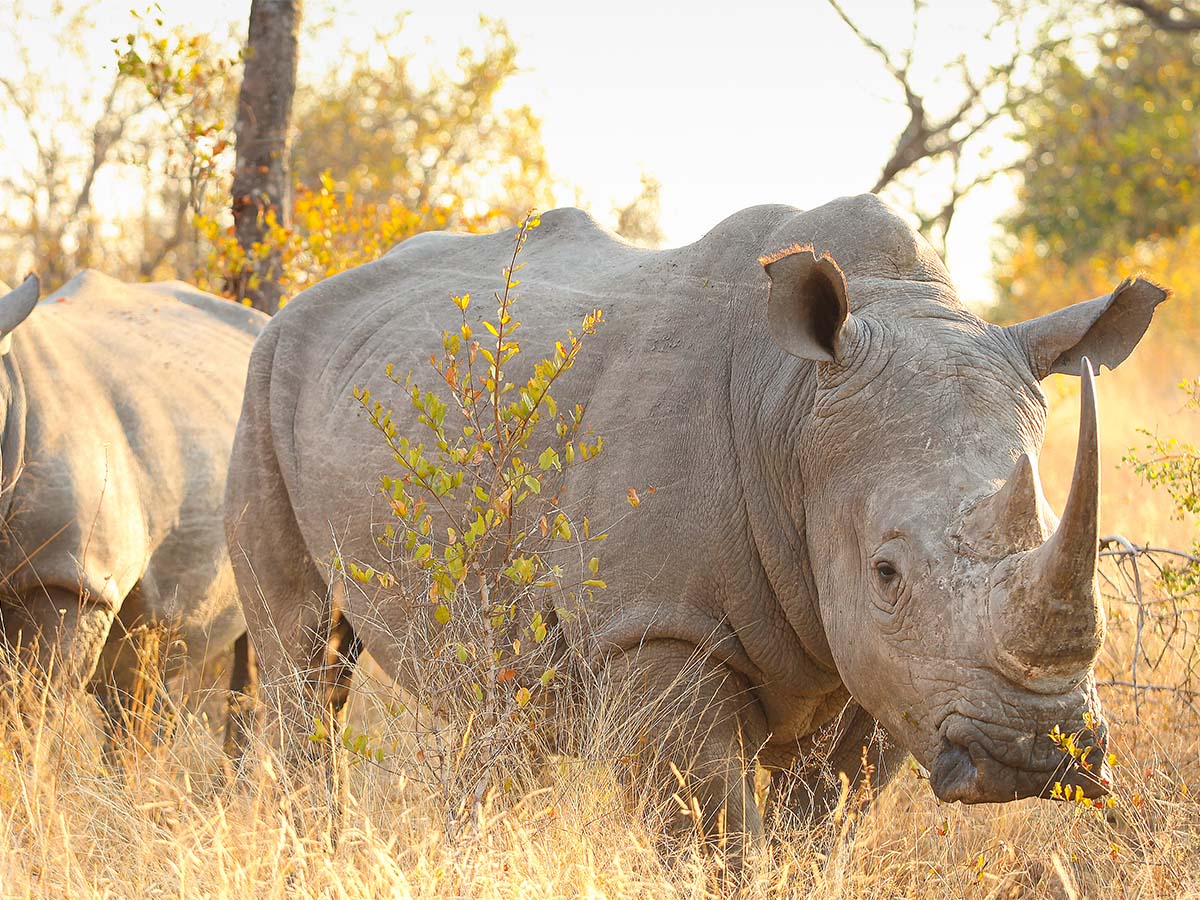
The main attraction of the national park is the Mkomazi Black Rhino Sanctuary, where the chance of seeing these rare inhabitants is higher than in any other park in Tanzania. If you want to see these animals, be sure to include a visit to Mkomazi in your safari program.
Mkomazi National Park is located in the northeastern part of Tanzania. The drive from the cities of Moshi or Arusha, where travelers usually arrive before a safari, takes 4–6 hours.
In Mkomazi National Park, you can see the Big African Five: elephants, lions, leopards, buffaloes, and rhinos. The chances of seeing all five in one day are not as high as in Ngorongoro—the animals are still fewer in number and are not as accustomed to traveler’s vehicles as in more popular parks.
For a long time, Mkomazi was a hunting reserve, and numerous predators were almost completely exterminated. Therefore, finding leopards in Mkomazi can be quite challenging, sometimes taking 3-4 days. Other members of the Five can be seen in a couple of days.
Besides the Big Five, here you can see giraffes, hippos, zebras, hyenas, and African wild dogs, among a variety of other African animals. Herbivores are encountered more frequently than predators and are most often found near the Dindira Dam.
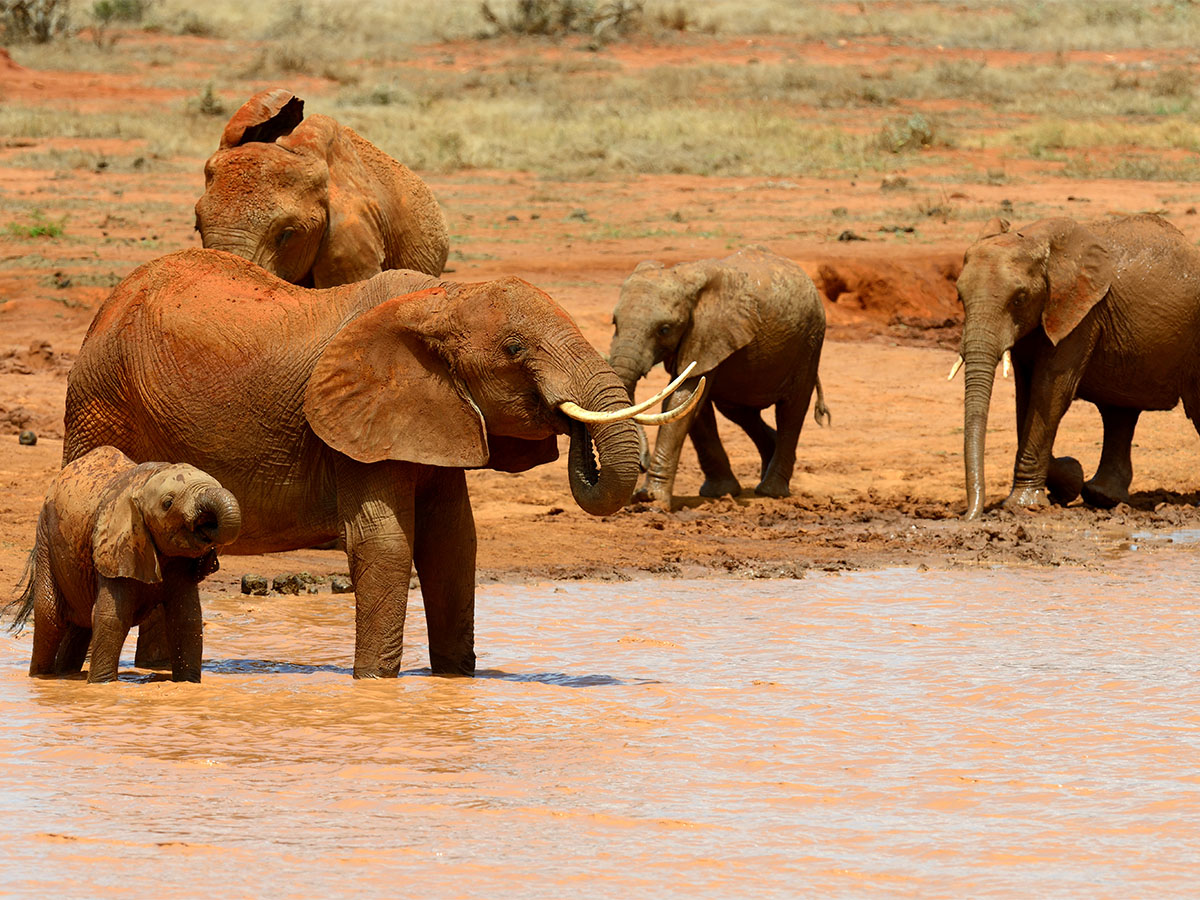
The number of animals in Mkomazi is not constant. The park borders one of the most famous reserves in Kenya—Tsavo National Park. Together they form one of the most important protected ecosystems on the planet. Animals freely move between the two parks, and sometimes there may be more animals in Mkomazi than usual.
Mkomazi National Park is one of the most interesting destinations in northern Tanzania for bird watchers. Over 400 species of birds reside here. From November to April, migratory birds from Europe increase the diversity of avian species that can be spotted in the national park.
A unique feature of birding in Mkomazi is that the park includes forests, plains, rocky hills, and low mountains. Thanks to these landscapes, you can see numerous birds from different ecosystems.
In Mkomazi, you can observe Von der Decken’s Hornbill, White-bellied Go-away-bird, Purple Grenadier, Secretary bird, Red-cheeked Cordonbleu, and hundreds of other interesting species. Since this area remains relatively poorly studied, birders have the opportunity to contribute with their observations.
Dry season
In January, it is the ‘summer’ season in East Africa. The weather is predominantly hot, with occasional rains. Mkomazi is covered in lush green grass, attracting ungulates: zebras, buffaloes, and gerenuk antelopes. Besides them, you can also see other inhabitants like lions and giraffes. Though less frequently than in other parks, leopards and cheetahs occasionally come close to the roads.
A section of the park is dedicated to the rhino sanctuary. This is the main attraction of Mkomazi and one of the few places in Tanzania where you can almost certainly see rhinos. Before entering the sanctuary, you will transfer to an open off-road vehicle, from which rhinos are better seen from different angles.
Along with a safari guide, a ranger from the sanctuary will accompany you to help find the rhinos. The rangers know each resident of the sanctuary and will tell you all about them.
Dry season
As in other parks in northern Tanzania, February in Mkomazi is hot with occasional rains. Most herbivores stay close to the Dindira Dam. There, you can almost always see giraffes, elephants, ostriches, and zebras. Crocodiles live in the park’s water bodies. They spend most of their time in the water but occasionally come ashore.
February is great for birdwatching: migratory birds from Europe and Asia are in Mkomazi, and species diversity is at its peak. Nearly 400 bird species have been spotted in Mkomazi so far, and the list continues to grow. Here you can spot various hornbills, colorful starlings, sunbirds, and birds of prey, among many others. The diverse ecosystems of Mkomazi make birding here particularly exciting.
Rainy season
The beginning of March is one of the best times for safaris in Tanzania overall. At this time, there are few travelers in all parks, and you can enjoy the wild nature of Africa with minimal numbers of other safari vehicles around. In Mkomazi, there are usually no more than ten cars per day.
In Mkomazi, you can see the main representatives of African fauna: elephants, giraffes, ostriches, zebras, and antelopes. Although in smaller numbers than in other northern parks, lions are also present. Around the park’s water bodies, you can observe crocodiles.
During a lunch break in a designated area, you might see hyraxes — cute furry creatures that, surprisingly, are biologically the closest relatives to elephants. Your safari guide will share more details about them.
Rainy season
April is the rainy season across Tanzania. There are fewer travelers in the safari parks, and hotels and lodges offer substantial seasonal discounts. Accommodation costs are one and a half to two times cheaper than in January or August. This month is recommended for those who want to enjoy Tanzania’s safari parks in solitude and at a lower cost.
Although it usually rains every day, sometimes there are dry days. Moreover, the rains do not last all day: they usually start in the afternoon and end at night. If you go on a game drive in the morning, you will surely return to the lodge before the active phase of the rains begins.
With the emergence of seasonal water sources, animals — elephants, antelopes, giraffes, and other savanna inhabitants — disperse across the reserve. They no longer need to stay near the Dindira Dam and can be spotted anywhere in Mkomazi.
Shoulder season
May is the last month of the rainy season. Like in April, lodges offer the lowest prices of the year, and there are almost no visitors in the park. This month is recommended for travelers who want to see how Tanzania’s national parks look without other visitors. In all of Mkomazi, there will likely be only 1-2 vehicles at the same time as you.
On a safari, you will see the main inhabitants of the savanna: elephants, giraffes, and antelopes. Predators are less common in Mkomazi than in other northern Tanzanian parks, but if you’re lucky, you might see lions. Other cats, like cheetahs and leopards, are rarely seen. Sometimes there are more animals than usual: the park borders Kenya’s Tsavo West National Park, and migratory herds of antelopes, zebras, and other ungulates cross over from Kenya.
Dry season
In June, the wet season ends in Tanzania. There are more travelers in the parks, and lodge prices gradually increase. However, at the beginning of the month, you can still take advantage of seasonal discounts.
Despite the start of the tourist season, there will not be as many people in Mkomazi as in Tarangire, Serengeti, or Ngorongoro. It makes sense to include this national park in your travel program if you want to spend a day or two away from other visitors and be alone with nature.
June is an excellent time to visit Mkomazi’s main attraction, the rhino sanctuary. It opened to regular travelers relatively recently, in 2019. The chance of seeing the rarest animal in Africa here is much higher than in other parks.
Dry season
July is one of the driest months of the year. In Mkomazi, this is particularly noticeable: there are few water sources in the park, and the landscapes change from bright green to desert yellow. The grass dries up, making it easier to spot smaller savannah inhabitants like African hares, mongooses, and small antelopes. More frequently than in other months, you might also encounter the endangered African wild dogs. This species is under threat of extinction, and Mkomazi is one of the few places in Africa where these animals can be seen in relatively large numbers.
Large mammals—elephants, giraffes, zebras, and buffaloes—tend to stay close to the Dindira Dam. Encounters with predators—lions, leopards, and cheetahs—are less common than in other northern parks, but in July and other summer months, they are easier to spot due to the lack of vegetation.
Dry season
August is the busiest safari month of the year. During this time, the main influx of travelers arrives in Tanzania, and popular parks like Ngorongoro, Tarangire, and Serengeti see quite a few off-road vehicles. The number of visitors to Mkomazi also increases, but not as significantly as in the ‘main’ northern parks. At the same time, you may encounter up to 10 vehicles throughout the entire park. Given the size of Mkomazi, you are unlikely to notice them.
Due to the drought, there is little grass in the park, and all animals are easily visible. Large mammals — elephants, zebras, giraffes, and antelopes — are easiest to find near the main water source in the park, the Dindira Dam. After visiting it, you can go to the rhino sanctuary, where you can observe how the population of the rarest animals in Africa is being restored. There, you can meet the little rhino that our company has adopted.
Dry season
In September, the dry season continues in Tanzania. Like August, this is a popular time for safaris, and seasonal traffic approaches its peak. During this time, Mkomazi is one of the few parks where you can enjoy Africa’s nature away from other travelers. You can see the main inhabitants of the African savanna: lions, elephants, ostriches, zebras, antelopes, and giraffes. On the riverbanks, you can see crocodiles.
Mkomazi borders West Tsavo, one of Kenya’s main safari parks, so animals from the Kenyan side occasionally enter its territory. As a result, encounters with wild inhabitants of Africa occur more often than expected. The famous rhino sanctuary of Mkomazi is isolated from Tsavo: to protect them from poachers, the most valuable animals of Africa cannot leave Mkomazi. You can observe them at any time of the year.
Shoulder season
October is one of the best months for safaris in Tanzania. The number of travelers in the parks is decreasing, and hotels begin to offer seasonal discounts. The seasonal rains have not yet begun, and the weather is pleasantly warm.
Although less frequent than in other northern parks, you can still spot the Big African Five in Mkomazi: elephants, lions, buffaloes, leopards, and rhinos. The latter are especially interesting in the context of visiting Mkomazi, as it’s practically guaranteed that you can see them here.
The rhinos of Mkomazi live in a special sanctuary that they cannot freely leave. This sanctuary has a specific access regime for visitors, and its inhabitants are constantly guarded by armed rangers. This is one of the few places in Africa where rhinos are not threatened by poachers.
Rainy season
November marks the start of the seasonal rains in Mkomazi. There are practically no other travelers in the northern parks, and, like in April, accommodation prices are at their lowest. Only a few safari vehicles visit Mkomazi each day during this time. If you want to experience the nature of Africa without the hustle of other travelers around, November is a good choice. Afternoon rains may occur, but by that time, you will likely have returned to the lodge, and the wet weather won’t be a hindrance.
In addition to the main representatives of African fauna—the Big Five, zebras, and antelopes—you can also observe African wild dogs in Mkomazi. This species is at risk of complete extinction, and it is precisely in Mkomazi where the Tony Fitzjohn Foundation has been conducting a successful project to restore their population.
Rainy season
December is a transition month between the autumn lull and the active winter safari season. At the beginning of the month, many hotels still offer seasonal discounts, and you can explore this national park at a lower cost than in August or February.
Large mammals — elephants, giraffes, zebras, and antelopes — usually stay near the Dindira Reservoir. Although there are fewer predators in Mkomazi, you can sometimes see lions. Cats, such as leopards and cheetahs, are rarer.
Mkomazi’s signature attraction is the rhino sanctuary. It is open all year round, and you can almost always see the rarest inhabitants of the savanna there. Such an opportunity is not even available in the famous Ngorongoro.
Mkomazi receives less rainfall than other northern Tanzanian national parks which makes it quite unique. According to the WorldClim, April, the rainiest month, averages 96 mm of precipitation. During the same month, the Serengeti receives 140 mm, Tarangire – 139 mm, and Ngorongoro – 143 mm.
Our practical observations confirm the WorldClim data: Wild and Nature Safaris expeditions visit Mkomazi in different seasons, and we can confidently say that the park appears drier than others. This may be of interest to photographers: in the dry months, you can take authentic savannah photos without many other safari vehicles in the background.
Rhino Sanctuary
Since 1997, Mkomazi has been home to one of Africa’s most successful black rhino population restoration projects. For a long time, it was closed to travelers, and only in 2019 was entry allowed for visitors. You can visit the sanctuary on a safari with wild and nature safaris.
You can see rhinos in Mkomazi thanks to the work of Tony Fitzjohn. Born in England in 1945, he moved permanently to Africa at the age of 23, where he began working on animal conservation projects. His mentor was George Adamson—the first European to systematically address the issue of wildlife conservation in Africa. Tony worked with Adamson in Kenya for 18 years.
In 1989, the Tanzanian government invited Tony to restore the Mkomazi Game Reserve, which had been severely damaged by poachers by that time. Populations of many animals in Mkomazi were virtually on the brink of complete destruction. Tony assembled and trained a team of rangers who began regular patrols of the park. Roads were built, and a permanent ranger post was established. The number of poaching incidents began to decrease, and wildlife began to recover. The elephant population increased from 11 individuals in 1989 to 500 in 2022.
In 1997, Tony founded a project in Mkomazi to reintroduce the endangered black rhino. They had been completely exterminated in Mkomazi. To assemble the first colony, Tony negotiated with national parks across Africa and zoos worldwide. Animals were brought to Mkomazi, and Tony and a team of veterinarians continuously monitored their condition and protected them from dangers. A fence was built around the territory where the rhinos live, and entry was closed to everyone except project staff.
Gradually, the rhino population surpassed the critical threshold, and in 2019, regular travelers were allowed into the project area. This is the only place in Tanzania where you can almost always see a black rhino.
In the same year, Tony Fitzjohn handed over the management of the project to the Tanzania National Parks Administration (TANAPA) and returned to Kenya.
In addition to conservation efforts, Tony worked to engage the local communities by creating employment and educational opportunities.
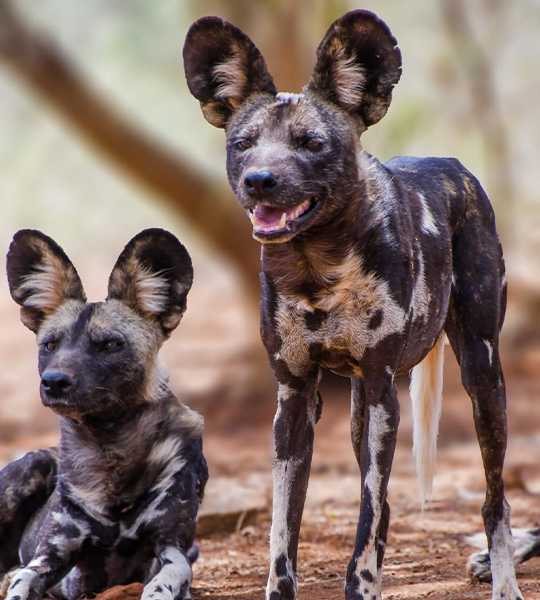
Few travelers know about African wild dogs. They somewhat resemble hyenas, but biologically, they are entirely different animals. They are some of the most organized predators: the entire pack participates in the hunt, and to conserve energy, the dogs speed up in turns, cornering the prey. During the chase, they spread out so the fleeing antelope has nowhere to retreat. The success rate of such hunts reaches 80%. This is higher than that of most other savannah predators, including lions (20–30%) and leopards (about 40%).
Since 1990, they have been considered a highly endangered species. Today, there are fewer than 7,000 individuals left in the world. In Mkomazi, they were almost completely exterminated.
During his work in Mkomazi, Tony Fitzjohn’s team launched a project to return these animals to Mkomazi. Over 200 individuals were relocated to the park, from which a new population has grown. Today, this is one of the few places where you can observe African wild dogs.
Mkomazi covers an area of 3,234 square kilometers (1,248 sq mi). This is about the size of the island of Majorca in Spain or one and a half times smaller than the island of Bali. One day is enough to get acquainted with the park. For a detailed exploration of all locations, it’s better to allocate two to three days.
It makes sense to stay for three or more days only if you are seriously into rhino tracking or birdwatching. Other animals can be seen in larger quantities in the more popular parks of northern Tanzania, such as Tarangire, Ngorongoro, and Serengeti.
According to the former head of the Tanzania National Parks Authority, Allan Kijazi, about 8,000 people visit Mkomazi each year. This is a small number compared to Serengeti, which attracts nearly 1.2 million visitors annually.
The low visitor numbers are not due to Mkomazi being uninteresting. The main reason is that many travelers and tour agencies are unaware of this park and do not include it in their itineraries. We are confident that in the next 5-7 years, the situation will change, and Mkomazi will become one of the top five most popular parks in northern Tanzania.
Until that happens, Mkomazi’s lesser popularity allows for an intimate experience with African wildlife, even during the peak tourist season.
EXCELLENTVerified Ndutu experience We had an amazing experience with wild and nature safari, five days safari ndutu was amazing we sawa another of animals and amazing scenery, Ernest was very good, knowledge and he answered all of our questionsPosted onVerified Amazing experience I had a solo experience with Wild and Nature Safaris on Mikumi day trip, it was amazing and I had a great experience. Thank you Wild and Nature Safaris.Posted onVerified BIG FIVE to reality Such an amazing experience with wild and nature safaris, we had a 5days safari with Ernest, we saw a-lot of animals, BIG FIVE was a dream and he made it happenPosted onVerified Five star service Me and my family we Did a 7 days Serengeti and Ngorongoro in January , the trip was very organized. Our guide Hamad was very kind and he was good at spotting animals, we saw so many animals like Lions a lot of them in Serengeti. We give our 5 star rating to Wild and nature safaris for this amazing trip. The kids were very happy.Posted onVerified Unforgettable Mount Kilimanjaro experience We had an amazing 6 days Machame trekking in Mount Kilimanjaro with Wild and nature safaris. Everything was well organized from the start to summit, porters and guides were very helpful and supportive. The whole team made us feel safePosted onVerified Incredible Safari I had an incredible 3-day safari visiting Tarangire National Park and the Ngorongoro Crater, and it exceeded my our expectations. From start to finish, everything was well organized and professionally handle, thank you very much Wild and nature team ❤️Posted onVerified FRANK did it what an incredible start to an end of this amaizing trip, wild and nature safari made this dream come true, i have been planing this for years, it was a dream to me and they made it come true, thank you very much Frank for organizing this, everthing was perfect.Posted onVerified Bravo From the initial inquiry to the final drop-off, the organization was flawless. We worked with the coordinatr Frank, who was highly responsive and patientry all of our questions. Everthing was perfect from day one to the end brav to wild and natur safarisPosted onVerified Incredible Safari We just returned from an incredible 5-day safari across Tarangire, Serengeti, and the Ngorongoro Crater. The organization was flawless from the start. Frank was excellent during the planning phase, remaining flexible with our schedule and maintaining great communication throughout. Our guide, James was exceptional. His deep knowledge of wildlife and years of experience made every game drive feel like a true immersion into nature rather than a commercial tour. He had a brilliant eye for spotting animals; we were lucky enough to see the Big 5, including rare sightings of a leopard and a cheetah hunt. The vehicle was comfortable and well-equipped for the dusty terrain, and the service provided by the entire team was worth every penny. This was truly the adventure of a lifetime!Posted onVerified Couple’s Retreat My partner and I just finished an extraordinary 5-day safari with Wild and Nature Safaris, and we couldn't have asked for a better experience. From the moment we started planning with Frank, who was incredibly responsive and flexible with our schedule, we knew we were in good hands. Our guide, John, was absolute magic. He is friendly, professional, and has an incredible amount of experience with wildlife. He made the adventure feel like a true immersion into nature rather than just a commercial tour. We saw the Big 5 and felt completely safe and well-cared for throughout the trip. The accommodations were cozy and romantic, and the level of service was worth every penny. If you want a personalized, once-in-a-lifetime experience, ask for John!Verified by TrustindexTrustindex verified badge is the Universal Symbol of Trust. Only the greatest companies can get the verified badge who has a review score above 4.5, based on customer reviews over the past 12 months. Read more
Wild and Nature Safaris is a Tanzanian-owned safari company created from our love for adventure, nature, and our beautiful country. We are based in East Africa and we offer unforgettable safaris to Tanzania’s top destinations — including the famous Serengeti, Ngorongoro Crater, Mount Kilimanjaro, and the beautiful beaches of Zanzibar.

Please read the Privacy and Policy, Terms and Conditions carefully before making any payment.