
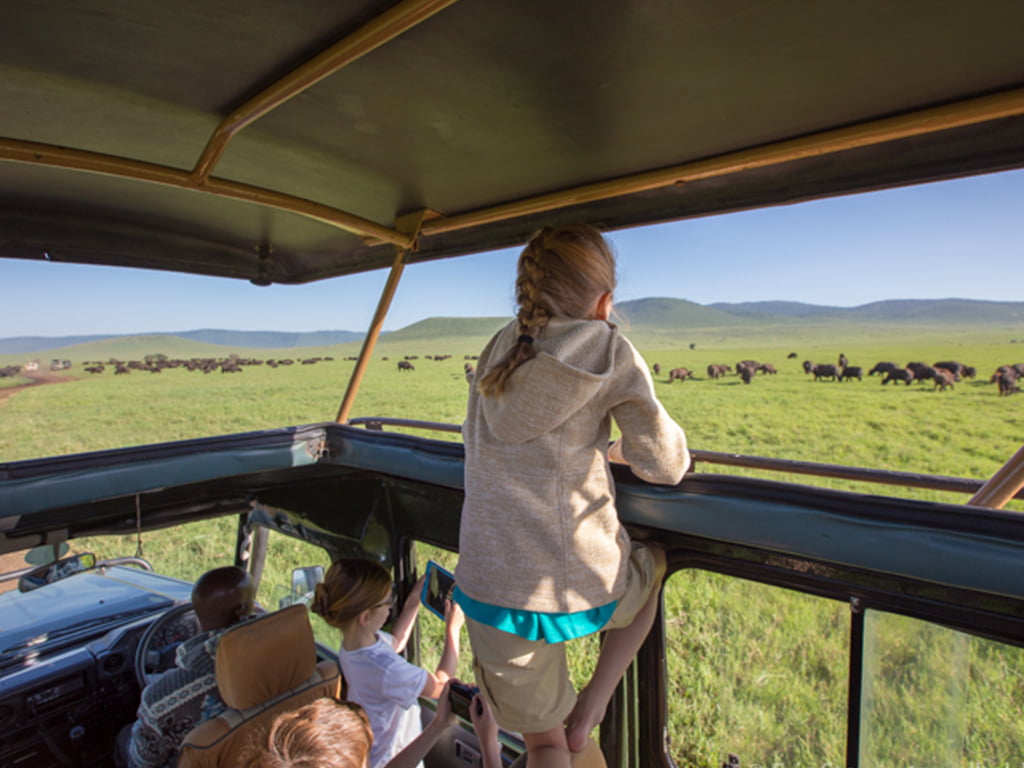
The main calving grounds can be found southeast of Seronera, where typical Serengeti plains extend all the way to the Ndutu area near Ngorongoro. The short rains in November and December prompted their relocation to this area. The wildebeest remain in this area until the end of the long rains, which occurs at the end of April or early May. The good news is that this section of the Serengeti National Park is easily accessible, and the landscape becomes lush during this time of year.
This is the time when the wildebeest, after feasting on the short green grasses of the southeastern Serengeti and giving birth to their offspring, begin preparing for their 800-kilometer journey. The actual start date could be between late April and early June. This is the time to witness one of the world’s greatest natural phenomena: more than a million marching animals in a column up to 40 kilometers long. The herd will migrate towards the Western Corridor during the migration.
Once the Grumeti River obstacle is overcome, the herds move north and in July or August begin crossing the next major obstacle, the Mara River. Many iconic Great Migration photos were taken at the Mara River crossing. After this crossing, the cattle migrate to the northwestern plains of Kenya and the Masai Mara National Reserve. August and September are considered the worst months to visit Serengeti National Park and witness the great migration of animals into Kenya’s Masai Mara.
Crossing the Mara River north meant the cattle would again cross south. This usually happens in October, but can happen earlier. During this period, the herd will travel across the northern plains and Lobo region. This part of the Serengeti National Park is rarely visited, so if you want to watch the migration in peace, now is the time to go. In late November, wildebeest return to the short grass plains and calving grounds around Ndutu. From here, a new great migration begins. The Great Migration continues.