
Authentic Tanzania Safari & Mount Kilimanjaro Experts
Authentic Tanzania Safari & Mount Kilimanjaro Experts
At the foot of the majestic Ol Doinyo Lengai volcano in northern Tanzania lies one of the most surreal landscapes in East Africa Lake Natron. This shallow, soda rich lake spans over 1,000 km² (400 sq mi), yet rarely reaches more than 3 meters (10 ft) in depth. Its size and appearance shift dramatically with the seasons, creating an ever-changing mosaic of colors and textures.
Unique, highly alkaline chemical conditions give the lake a striking, often blood red hue and contribute to its eerie reputation. Animals that perish in the lake’s waters are sometimes naturally preserved by the mineral rich environment, giving rise to tales of a “petrifying” lake.
Despite its harshness, Lake Natron plays a vital ecological role. Every dry season, millions of lesser flamingos flock here to breed, drawn by the lake’s abundant food supply and relative safety from predators. Their pink silhouettes against the crimson shallows create one of the most iconic natural spectacles in Tanzania.
Lake Natron is located in northern Tanzania, near the border with Kenya, within the eastern branch of Africa’s Great Rift Valley. It sits at the base of the active volcano Ol Doinyo Lengai, approximately 75 miles (120 kilometers) northwest of Arusha, Tanzania.
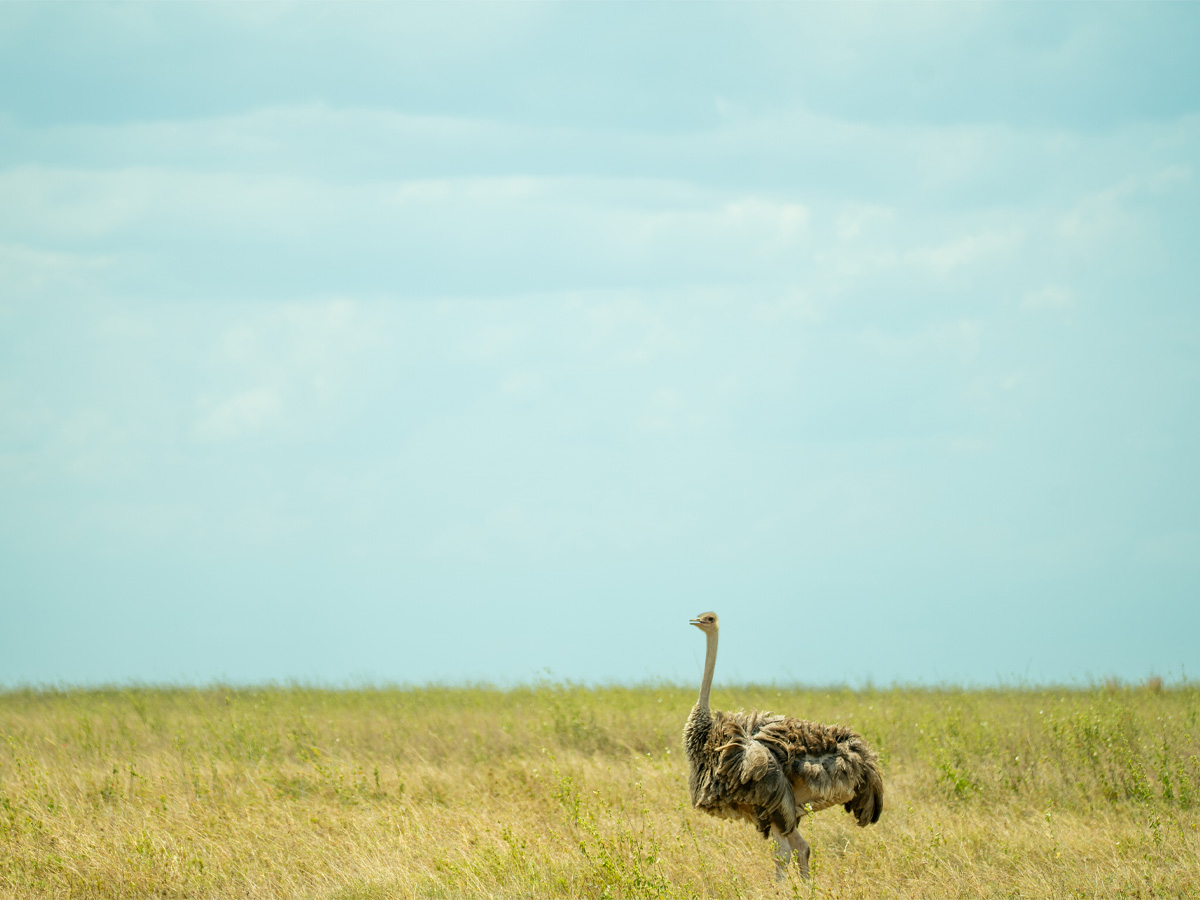
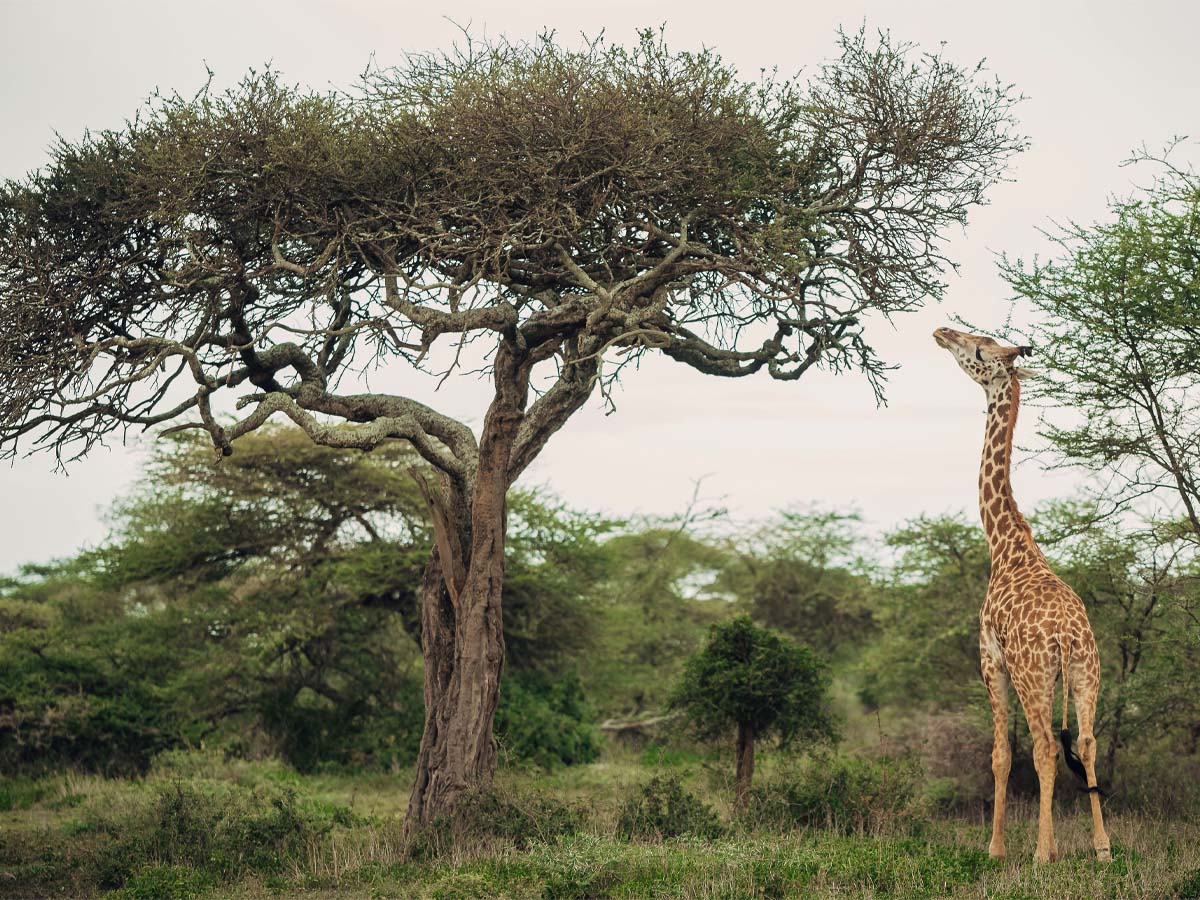
Beyond flamingos, the area around Lake Natron supports a variety of wildlife uniquely adapted to its harsh environment. Visitors might encounter zebras, giraffes, and wildebeests traversing the surrounding plains, while smaller mammals such as dik-diks and Grant’s gazelles find refuge among the region’s sparse vegetation.
Birders will also appreciate the diversity of other bird species inhabiting the area. Raptors, including the Verreaux’s eagle and Egyptian vulture, patrol the skies, while waders like the chestnut-banded plover and numerous migratory shorebirds frequent the shoreline, making Lake Natron a rewarding destination for bird enthusiasts.
The lake gained worldwide attention in 2013 after Nick Brandt published a series of haunting photographs in his book Across the Ravaged Land. The images showed dead animals seemingly turned to stone posing like statues on the lake’s shores.
These weren’t taxidermy figures but real animals that had been preserved by the lake’s waters. Lake Natron contains high levels of sodium bicarbonate, which causes calcification the same method ancient Egyptians used for mummification. The animals didn’t die just by touching the water; they were either already dead when they entered or became fully submerged and died, eventually hardening into salt encrusted forms. Brandt wrote that he found these “mummies” along the shoreline and posed them to look lifelike.
The renowned Serengeti, Ngorongoro, and Tarangire National Parks are situated in a different direction. For a comprehensive journey through all the key northern Tanzanian safari parks, it would be strategic to start your adventure at Lake Natron, and then continue your safari tour through the other iconic wildlife reserves.
The lake’s primary source of water is the Southern Ewaso Ng’iro River, also known as the “Brown River”, which flows from Kenya. It’s also fed by mineral-rich hot springs and seasonal rainfall. But the lake owes its unusual mineral makeup largely to the nearby active volcano Ol Doinyo Lengai.
Its lava, high in potassium and sodium carbonate but low in magnesium and calcium, is dense and black with an unusually smooth, liquid consistency. Over time, this lava has accumulated at the bottom of the lake and, through constant contact with the water, created a highly alkaline brine.
Lake Natron appears bright pink or red only for a few weeks each year, mainly during the dry season when salt levels are high and algae bloom. Most of the time, the lake is brownish, and many photos you can see online are enhanced to emphasize its vivid colors.
During droughts, as water evaporates, entire mounds of minerals appear on the exposed lakebed. As the water level drops, salinity rises to extreme levels ideal for the growth of local microorganisms like cyanobacteria.
These microbes love salty environments and bloom rapidly during dry spells. Like plants, they photosynthesize, and their pigments give the water and salt crust a reddish-pink color. When the rainy season returns, the colors fade and the water takes on its usual brown hue.
Interestingly, Tanzania is home to four alkaline lakes, Lake Natron being the most famous.
Rainy season
The weather stabilizes after the December rains. For the most part, the days are dry and hot, but occasional rainfall several times a week is still possible. While wildlife is dispersed and the landscape is turning arid, this period offers solitude for those seeking a less crowded experience. However, road conditions can still be challenging due to the residual effects of earlier rains.
Rainy season
Similar to January, February maintains high temperatures, with short rain possible a few times a week. You won’t see the large pink flamingo flocks at this time of year most mature chicks have migrated to the Ngorongoro area, including Empakaai Crater and Lake Ndutu. Some flamingos and water birds like pelicans remain. Still, you can enjoy year-round activities like meeting the Maasai or trekking to Engare Sero Waterfall. Travelers should remain cautious of potential road accessibility issues.
Shoulder season
By early March, the occasional rains of the previous months usually ease, making the roads more dependable. However, by the end of the month, the long rainy season begins to settle in, bringing higher humidity and fresh rainfall. Flamingos are still absent from the area, but some travelers take advantage of the drier conditions in the first half of March to attempt an Ol Doinyo Lengai climb.
Rainy season
April sees the peak of the long rains, leading to lush vegetation. However, substantial rainfall can make travel difficult, and some accommodations may close during this period. Visiting is not recommended due to the challenging conditions. Climbing Lengai during the long rains is strongly discouraged the already difficult trail, with its steep volcanic rocks near the crater, becomes dangerously slippery and unsafe.
Rainy season
As the rains begin to subside, the area remains verdant. While the scenery is beautiful, residual wet conditions may still affect accessibility to certain areas. Travelers are generally advised to avoid visiting during this month.
Shoulder season
Marking the start of the long dry season, June offers cooler temperatures and clearer skies. The drying landscape makes it an excellent time for hiking and exploring the region’s unique geological features. Road conditions improve, facilitating better access.
Dry season
Dry conditions persist, and temperatures are relatively mild. Flamingos begin to gather at the lake, marking the start of their breeding season. Wildlife becomes more concentrated around remaining water sources, enhancing viewing opportunities.
Dry season
Flamingo populations increase significantly as they gather in large numbers for breeding, creating a spectacular sight. The dry weather and moderate temperatures make it an ideal month for both bird watching and trekking.
Dry season
The peak of the flamingo breeding season offers unparalleled viewing experiences. The dry conditions continue, providing excellent opportunities for photography and exploration.
Dry season
Flamingo chicks start to hatch, adding to the vibrant wildlife scene. The weather remains dry and warm, making it a favorable time for visits.
Shoulder season
The short rains return, bringing sporadic showers and increased humidity. While the landscape begins to green, some activities may be intermittently disrupted by rainfall. Flamingo chicks continue to develop during this period.
Shoulder season
Short rains continue, and the mix of rain and sunshine results in dynamic landscapes, but most young and adult flamingos begin migrating south, significantly reducing viewing opportunities. While some birds remain, sightings are far less frequent. Travelers should be prepared for unpredictable weather and potential accessibility challenges.
“Natron” is another name for sodium carbonate. Rich deposits of this mineral were found in the lake’s dried areas, and it was named after the well-known crystalline soda. Its chemical formula is Na₂CO₃.
Lake Natron isn’t a national park, but it’s a vital ecological and geological site. Conservation organizations protect its surrounding areas, especially the fragile nesting grounds of lesser flamingos the lake’s seasonal residents.
Estimates suggest that between 2 and 3 million lesser flamingos nest here accounting for around 75% of the global population. Greater flamingos and other bird species also visit, but in much smaller numbers.
Even though the lake’s waters are extremely alkaline and can reach up to 38°C (100°F) during the dry season, Lake Natron remains the main nesting site for lesser flamingos in East Africa. So how do they thrive in such hostile conditions and come to breed here after feeding at soda lakes across eastern Africa?
These birds are remarkably adapted. Their tough skin and thick, scaly legs protect them from chemical burns. They also have specialized glands in their heads that filter out salt, which is then expelled through their nostrils. In fact, the lake’s harsh environment deters most predators, making it a relatively safe haven for flamingos.
The waters of Natron are rich in algae, a primary food source for flamingos. Tilapia fish also live here mainly near the hot spring inlets, where the water is less salty. And there’s an abundance of brine shrimp (Artemia salina), tiny creatures that feed on microscopic algae. These algae contain carotenoids pigments that, through the shrimp, turn flamingo feathers pink.
During the rainy season, rainfall dilutes the lake’s salinity just enough for successful breeding.
Yes, there are fish in Lake Natron, though only a few species can tolerate its extreme conditions. These include several types of alkaline tilapia, such as Alcolapia alcalica, Alcolapia latilabris, and Alcolapia ndalalani all considered endemic fish species.
They survive in small freshwater pools and streams along the lake’s edges, where conditions are less harsh than in the open water. Their presence highlights how even highly alkaline environments can support specialized life forms.
No human deaths have been officially linked to Lake Natron, but it still poses certain risks.
The most serious incident happened in 2007 when Australian journalists were flying over the lake in a helicopter. The pilot lost control and crashed into the water. One crew member broke a leg, another fractured a hip, and a third reported eye damage from the water. Thankfully, all nine people on board survived, thanks to a swift rescue.
This incident proved that Lake Natron doesn’t turn living beings to stone on contact but without quick help, injuries from chemical exposure or drowning could have been fatal. A submerged body would eventually be mummified by the lake’s salts.
Is Lake Natron safe to swim in?
Lake Natron is not safe for swimming due to its extremely alkaline waters (with a pH similar to ammonia), high temperatures, and sharp, salty crusts that can harm the skin. While it’s a breathtaking, unique natural site, it’s best admired from the shore. Swimming is strongly discouraged due to potential health risks and to protect the lake’s fragile ecosystem.
Flamingo Chick Creches
In the blistering heat of Lake Natron, flamingo chicks gather in massive crèches crowds of thousands of downy youngsters watched over by a few adult “guards” while the rest of the colony forages. On this shimmering crust of salt and soda, the chicks’ soft gray plumage contrasts starkly with the neon pink of their parents, creating a scene that feels more extraterrestrial than earthly.
A volcano towering above Lake Natron
Just south of Lake Natron stands Ol Doinyo Lengai, a still active volcano revered by the Maasai as the “Mountain of God.” It’s the only place on Earth where natrocarbonatite lava erupts a rare type of lava that flows inky black and cools quickly into pale, brittle crusts. Over time, this unique material has helped shape the lake’s surrounding landscape, adding to the region’s stark, otherworldly appearance. Experienced hikers can take on the Lengai challenge
Living with Salt and Fire
The Maasai communities around Lake Natron have adapted to a land few would call hospitable. Herding cattle across dry plains and volcanic slopes, they navigate an environment shaped by alkaline waters, shifting heat, and the quiet presence of Ol Doinyo Lengai. Their traditions remain deeply tied to this landscape from seasonal movements to spiritual reverence for the volcano, seen not as a threat, but as a living part of their world.
Nearby is the legendary Engare Sero, a unique 300 m² (3,230 ft²) site between the volcano and the lake where over 400 ancient footprints of Homo sapiens have been found, dating back 5,000 to 19,000 years.
Engare Sero is right next to Lake Natron Camp a sustainable lodge on the lake’s southern shore. The location makes it easy for guests to walk to the site and even touch these remarkable traces of early human activity. Natural pools on the property of the camp are filled with spring water that flows directly into the lake.
On the lake’s western shore are Maasai villages home to one of Africa’s most iconic tribes. The Maasai strictly follow their ancestral traditions and wear traditional clothing, but they welcome visitors. If you’re heading to Lake Natron, be sure to visit a Maasai village to experience their culture, lifestyle, and unique rituals.
Some land around the lake is used for livestock and seasonal farming. Government plans to develop agribusiness here pose a serious threat to Lake Natron’s delicate balance.
If forests are cleared and a hydroelectric dam is built on the lake’s only feeding river, it could lead to the lake drying up entirely devastating the ecosystem and destroying this natural marvel. Even with a proposed dam to retain freshwater, it won’t be enough to prevent changes to the lake’s pH.
Another looming threat is a planned sodium carbonate processing plant. The mineral is used in fertilizers, heat-resistant glass, and cleaning agents. More than 50 East African environmental organizations have joined forces to protect Lake Natron in a large scale campaign. While the project is still under discussion, it’s unclear whether conservationists will succeed in stopping this environmental risk.