Authentic Tanzania Safari & Mount Kilimanjaro Experts
Authentic Tanzania Safari & Mount Kilimanjaro Experts
In 1968, the renowned jewelry house Tiffany & Co. introduced a striking new collection featuring an extraordinary gem—tanzanite. With its captivating blue-violet glow, this gemstone quickly drew global attention. What makes it even more remarkable is its origin: tanzanite is found in just one place on Earth—Tanzania, near the base of Mount Kilimanjaro.
This article explores the origins, characteristics, value, and mining of this rare and fascinating stone.
The story of tanzanite’s discovery is told in different ways. According to the version recognized by the Tanzanian government, the first crystal was uncovered in 1967 by a local man named Jumanne Mhero Ngoma, who later received official recognition and a financial reward of 50,000 shillings
However, there is another version that has gained more recognition in the West. According to this version, the rare gem was found by tailor Manuel de Souza, affectionally known as “Mad Manuel”. He dreamed of getting rich through the extraction of gold and precious stones. Having earned some money by sewing clothes, de Souza set off to Tanzania in search of new gold and ruby deposits. His expedition was accompanied by several locals – Maasai hunters.
Nothing significant was found, but Mad Manuel did not lose hope and continued to explore the area. On July 7, 1967, his attention was drawn to a translucent purple-red stone stumbled upon at the Merelani hills area.
Another widely known account credits Manuel de Souza, a prospector nicknamed “Mad Manuel.” While searching for gold and rubies with Maasai companions, he stumbled upon a shimmering purplish stone in the Merelani Hills. At first, he believed it to be sapphire, but further testing revealed it was something entirely different—a rare variety of the mineral zoisite.
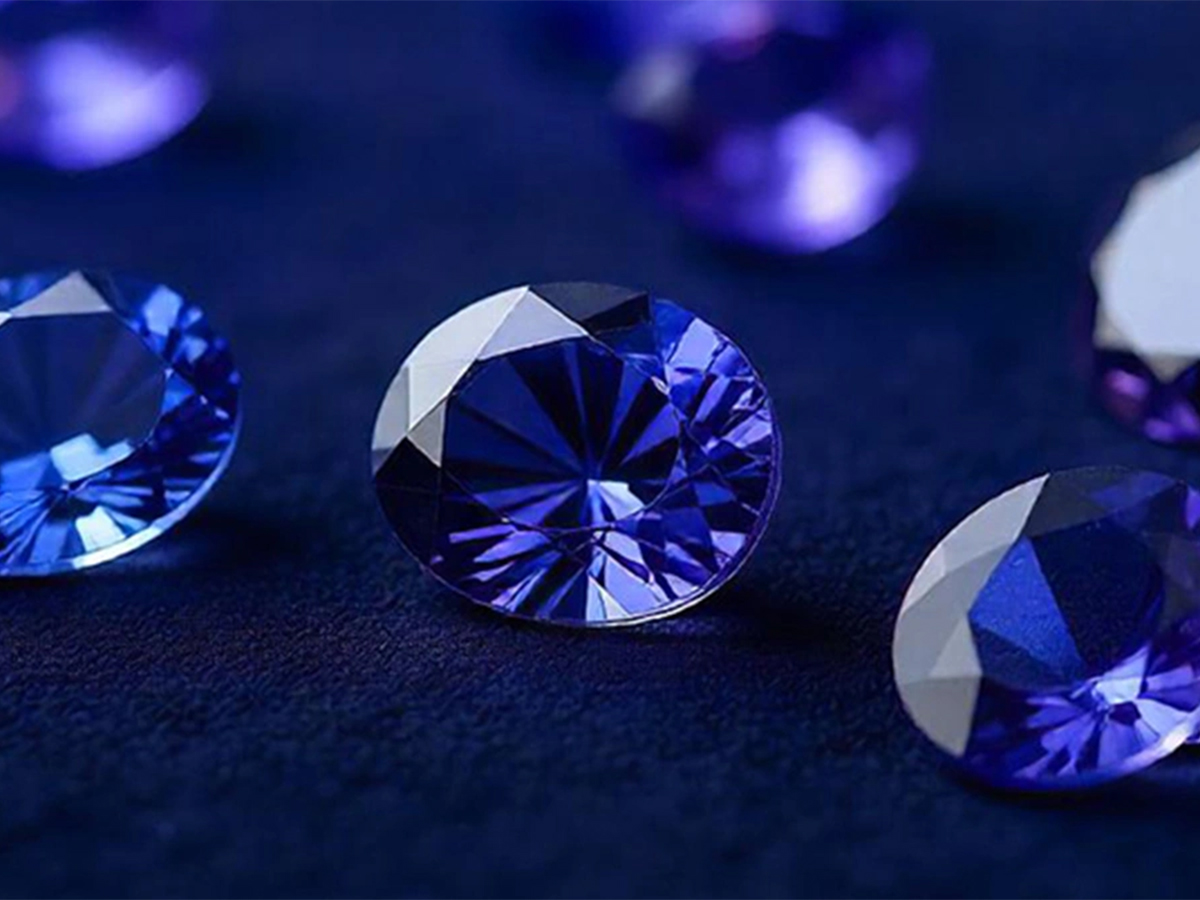
Zoisite is an inexpensive semi-precious stone, discovered in the early 19th century. It is mined almost all over the world: in Eurasia, North and South America, Africa. In appearance, zoisite can be so different that it is hard to believe it is the same mineral. It can be transparent and matte, and the color varies from yellow to emerald with raspberry veins. Blue zoisite can resemble blue topaz or even the expensive blue sapphire.
However, Zoisite itself is not particularly rare and can be found in many parts of the world. However, the vibrant blue variety known as tanzanite exists only in Tanzania. Its brilliance and resemblance to precious stones like sapphire caught the attention of Tiffany & Co., where Henry B. Platt—a descendant of the company’s founder—coined the name “tanzanite” and helped introduce it to the global market.
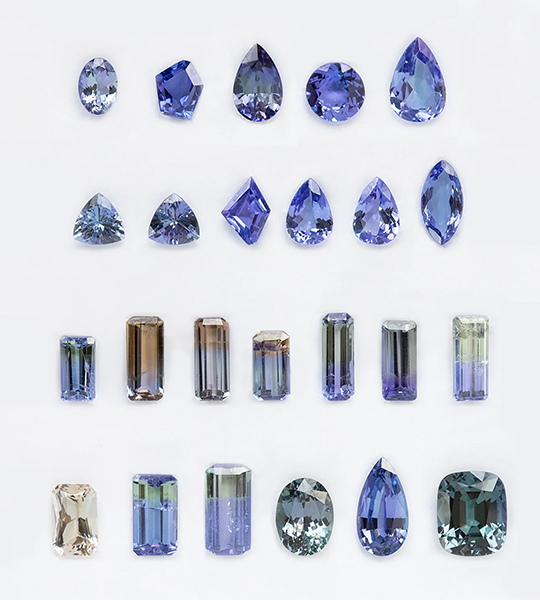
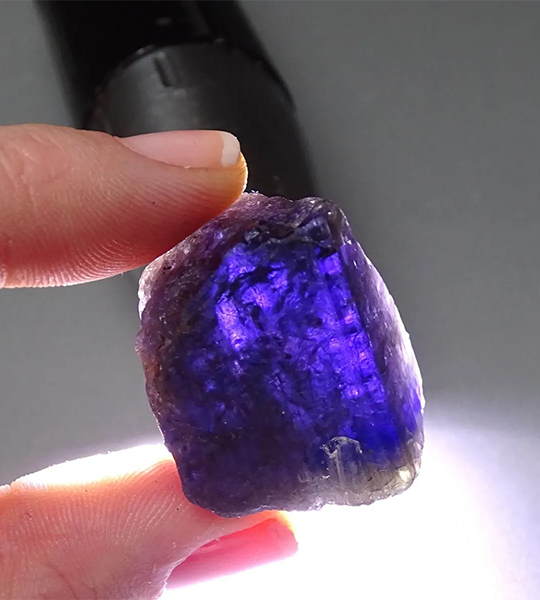
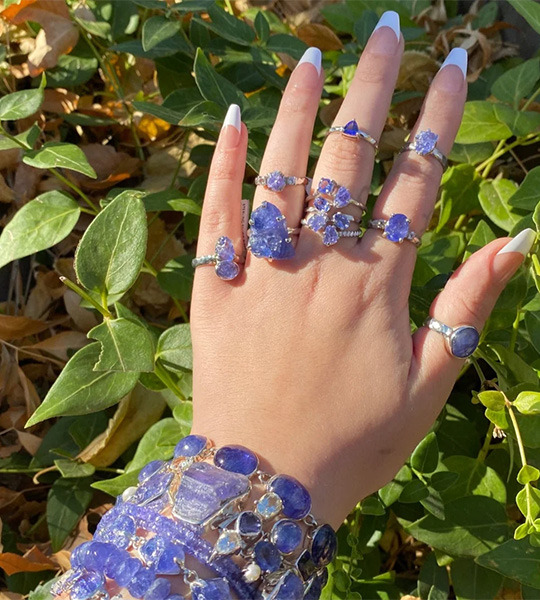
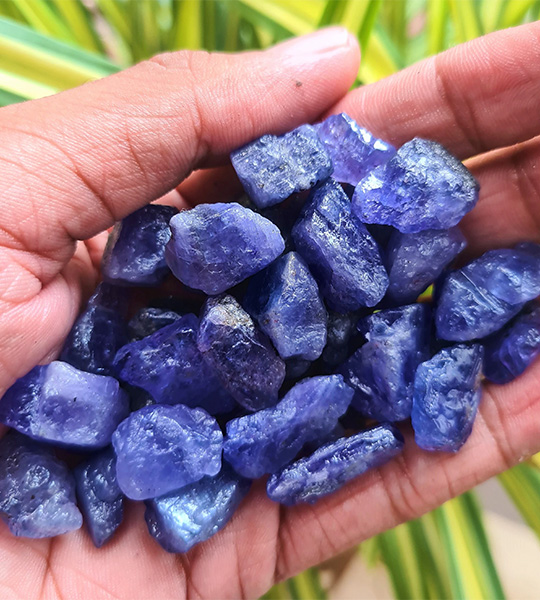
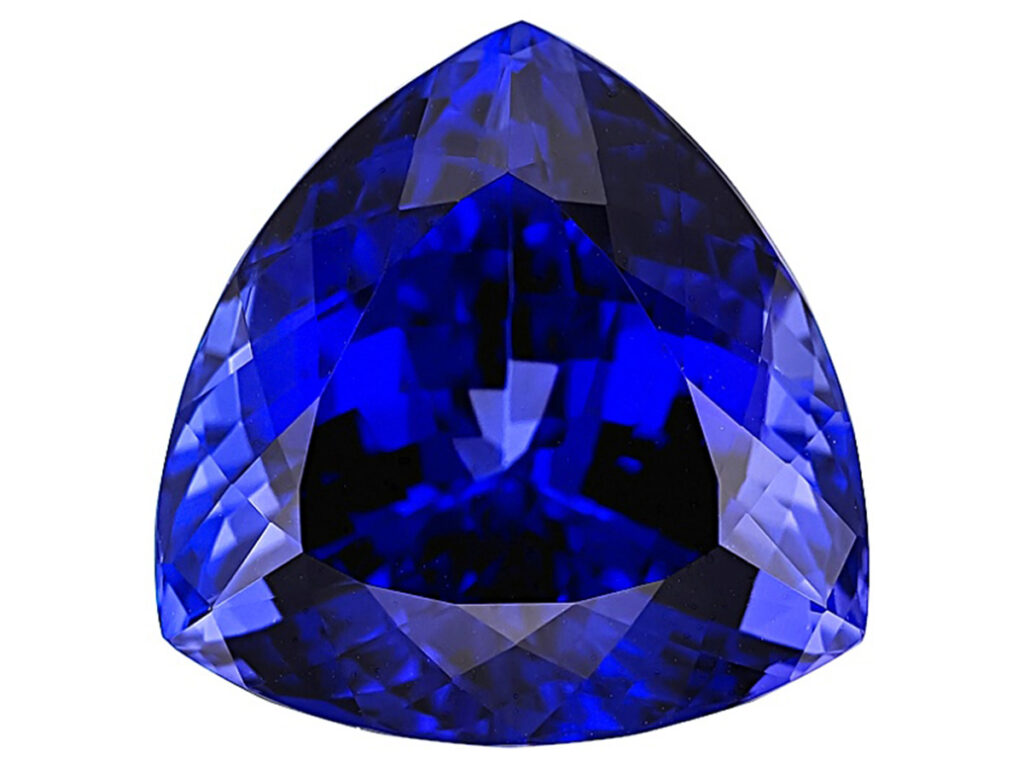
Tanzanite is admired for its intense and shifting colors. Depending on the angle and lighting, it can appear blue, violet, or even golden-brown. This optical effect is known as pleochroism. Jewelers often enhance its natural blue tones through heat treatment and careful cutting.
The appearance of the stone largely depends on the processing. Jewelers try to enhance the naturally blue color of tanzanite through cutting and other methods like heat treatment. So, it often ends up resembling blue sapphire or blue diamond. However, other colors also exist, for example, green tanzanite.
There is a legend that in the movie “Titanic,” the role of the “Heart of the Ocean” diamond was played by tanzanite. Allegedly, director James Cameron liked how this clean and bright faceted stone looked on screen. But this is a myth: several necklaces were made for the film, and all of them were encrusted with synthetic spinels.
Tanzania is the only place on the planet where tanzanite is mined, making this gemstone rarer than a diamond. Deposits of various minerals are formed at the junction of two tectonic plates under the influence of temperature and pressure. Each plate has a unique composition. And it was in Tanzania, at the foot of Kilimanjaro, that tanzanite – zoisite with a mixture of chromium and vanadium ions, which gave the stone its characteristic blue color, was formed. No other similar deposits are known today.
In terms of hardness, tanzanite is inferior to other gemstones. On the Mohs scale, the hardness of tanzanite is like glass – 6.5-7 units. This means it is softer than the famous diamonds, sapphires, and rubies. However, tanzanite is cheaper. This is the second reason for the stone’s popularity.
While tanzanite hasn’t been synthesized, there might be tanzanite imitations on the market, and one should be cautious.
Experts say that jewelry with tanzanite can be a good investment. The only Tanzanite deposit in northern Tanzania is gradually depleting, so new stones will soon be unavailable. And the demand for those striking colored stones is only growing. Most likely, the price will also rise, especially for the top-grade Tanzanite.
The only tanzanite mining area is located on the Merelani Plateau in the Arusha region near Kilimanjaro. The area is a strip about two by four kilometers wide. Until the 1990s, the stone was mined by private companies. Then the Tanzanian government decided to take control of this process and organize it. Since then, a special license is required to mine Tanzanite.
The deposit is divided into four zones: A, B, C, and D. Zones A and C are allocated for foreign companies, while B and D are for Tanzanian prospectors. The main volume of minerals is brought by zone C, as it is the most convenient for development. Since 2014, the mining of Tanzanite in this zone has been carried out by the British company Sky Associates Group Ltd.
Initially, Tanzanite was found on the surface of the earth. Today, the valuable mineral is extracted from a depth of 200-400 meters. The stones are sorted and processed on-site.
After erecting a 24-kilometer (15-mile) perimeter wall around the mines to enhance security and deter smuggling, production surged from 147.7 kilograms in 2018 to a record 781.2 kilograms in 2019.
Tanzanite is a finicky material: the stone’s appearance largely depends on the skill of the cutter. To determine the quality and value of tanzanite, a grading system is used. The stone is evaluated based on four parameters: color, clarity, cut, and carat weight.
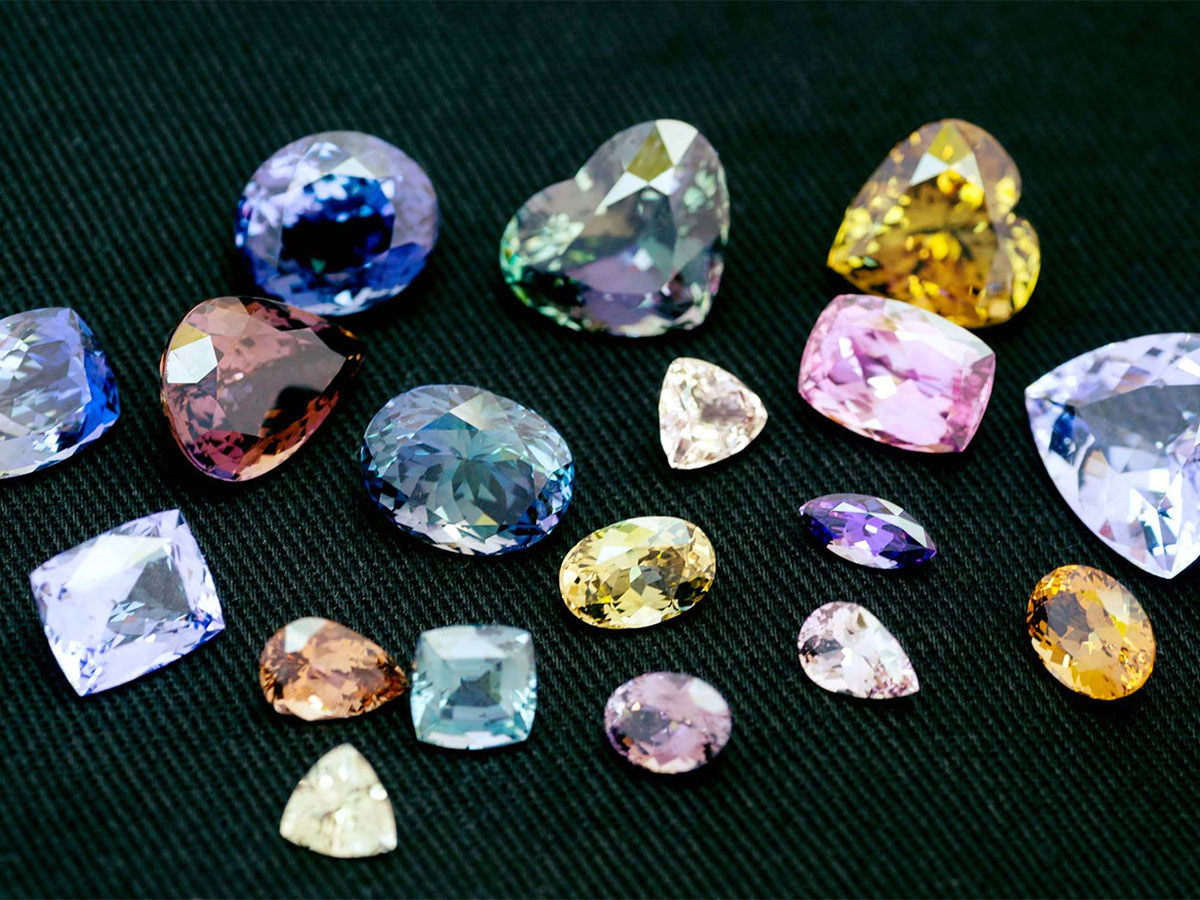
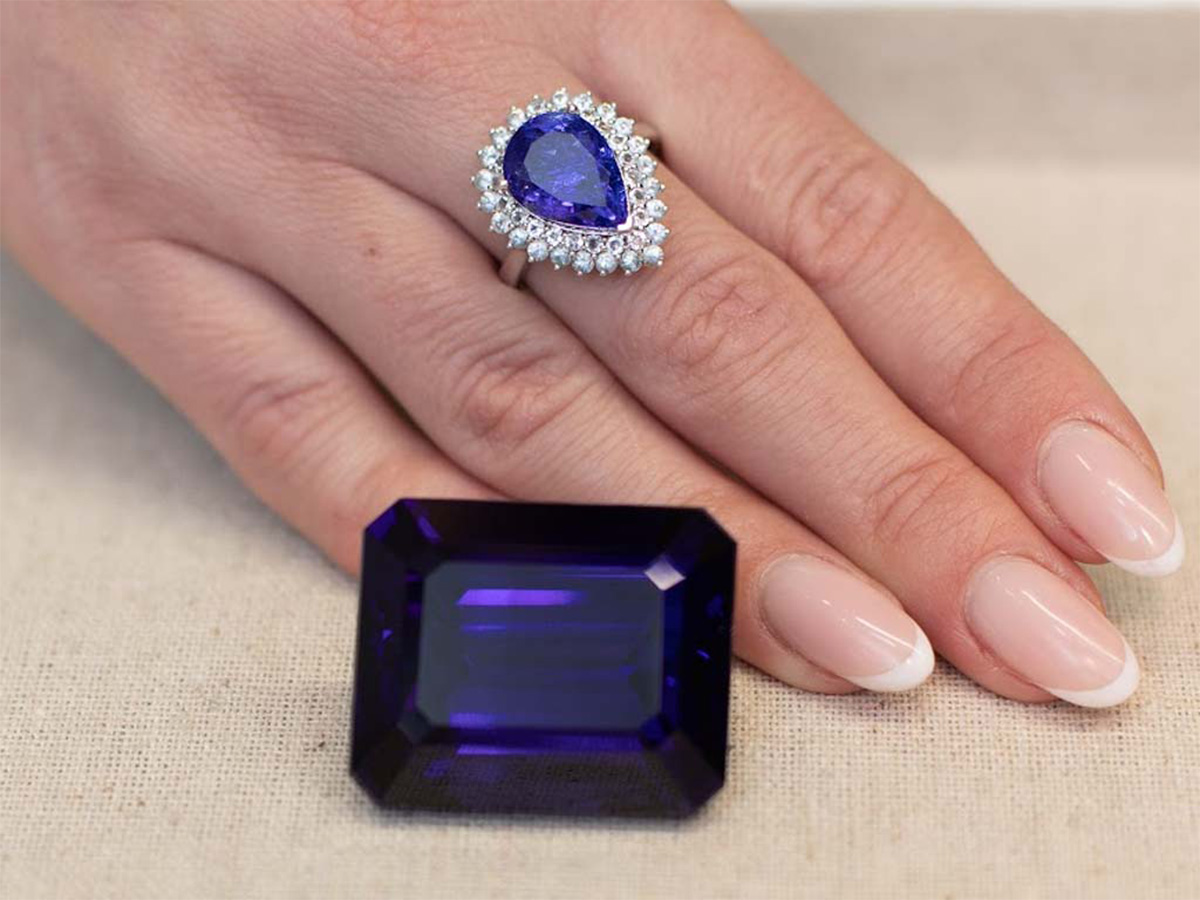
Two shades of treated tanzanite are typically graded: bluish violet (violet dominant) and violet blue (blue dominant). Each is assessed on a ten-point scale depending on color intensity.
The presence of inclusions in the stone is examined. Four groups are distinguished:
Angles and proportions are evaluated, but most importantly, the stone’s brilliance. The better the facets reflect light and the brighter they shine, the higher the cut quality. The cut grading system looks like this:
The weight of gemstones is measured in carats. One carat equals 0.2 grams.
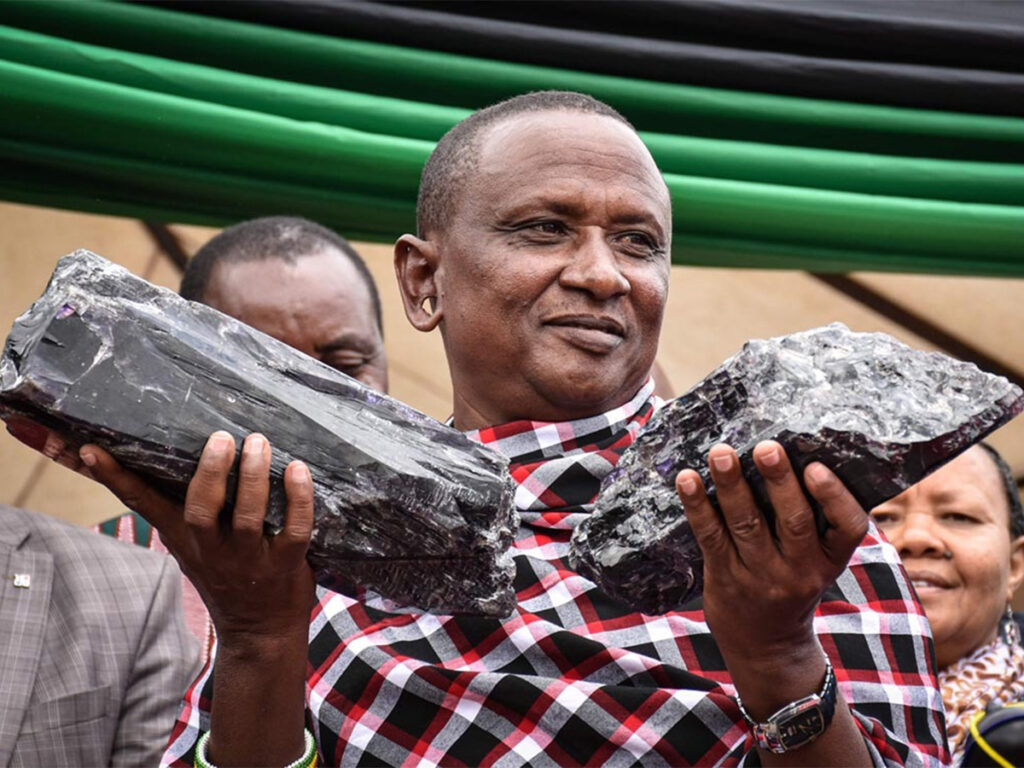
In 2020, miner Saniniu Laizer made headlines after discovering two enormous tanzanite stones weighing 9.27 kg and 5.103 kg. The Tanzanian government bought the tanzanites for $3.3 million. Saniniu Laizer decided to spend the money on developing his community: building a school and a shopping mall.
Tanzanite is no longer a novelty in the jewelry market. In 2017, the stone celebrated its fiftieth anniversary. Since then, it has won the hearts of gemstone enthusiasts. Many celebrities have appeared wearing tanzanite jewelry: Anne Hathaway, Cate Blanchett, Sarah Jessica Parker, Penelope Cruz, Beyoncé.
In 2002, tanzanite was chosen by the American Gem Trade Association in the Birthstone List — a list of stones by birth date, published since 1912. Tanzanite is recommended to be worn by those born in December. It also became a traditional gift for the 24th wedding anniversary.
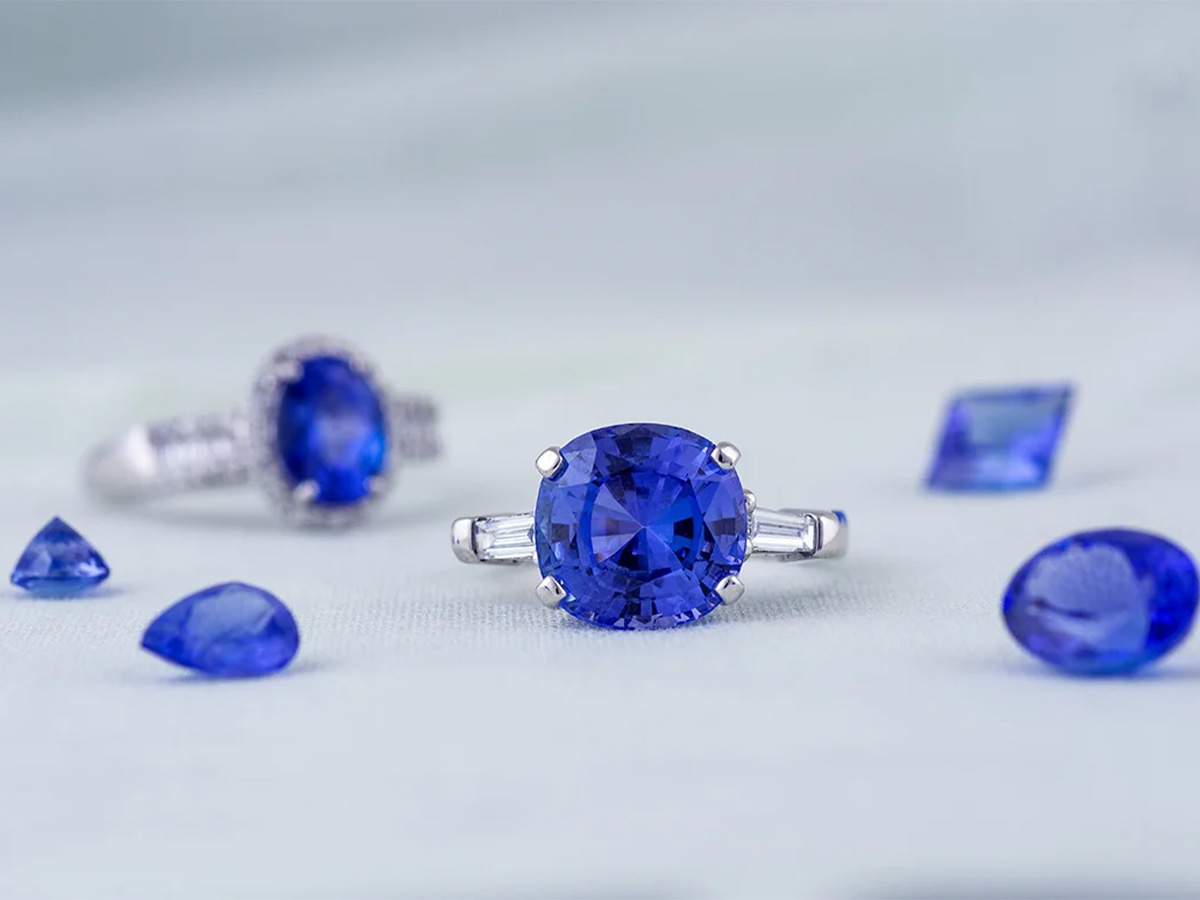
The price of a gold ring featuring tanzanite begins at $300, while earrings start at $150. Because tanzanite is a captivating and sought-after gemstone, jewelry with tanzanite tends to be bold and substantial, often accented with diamonds. As a result, the price range can vary considerably. For instance, a platinum Tiffany ring adorned with tanzanite and a cluster of diamonds is priced at $13,200.
A Gem Worth Discovering, If you’re curious to learn more, you can visit the The Tanzanite Experience in Arusha, located close to the mining region. This museum showcases the history, mining process, and beauty of tanzanite, along with unique jewelry crafted by local artisans, including Maasai women.
Tanzanite remains one of the world’s most intriguing gemstones—rare, beautiful, and deeply connected to the land where it was born.