Authentic Tanzania Safari & Mount Kilimanjaro Experts
Authentic Tanzania Safari & Mount Kilimanjaro Experts
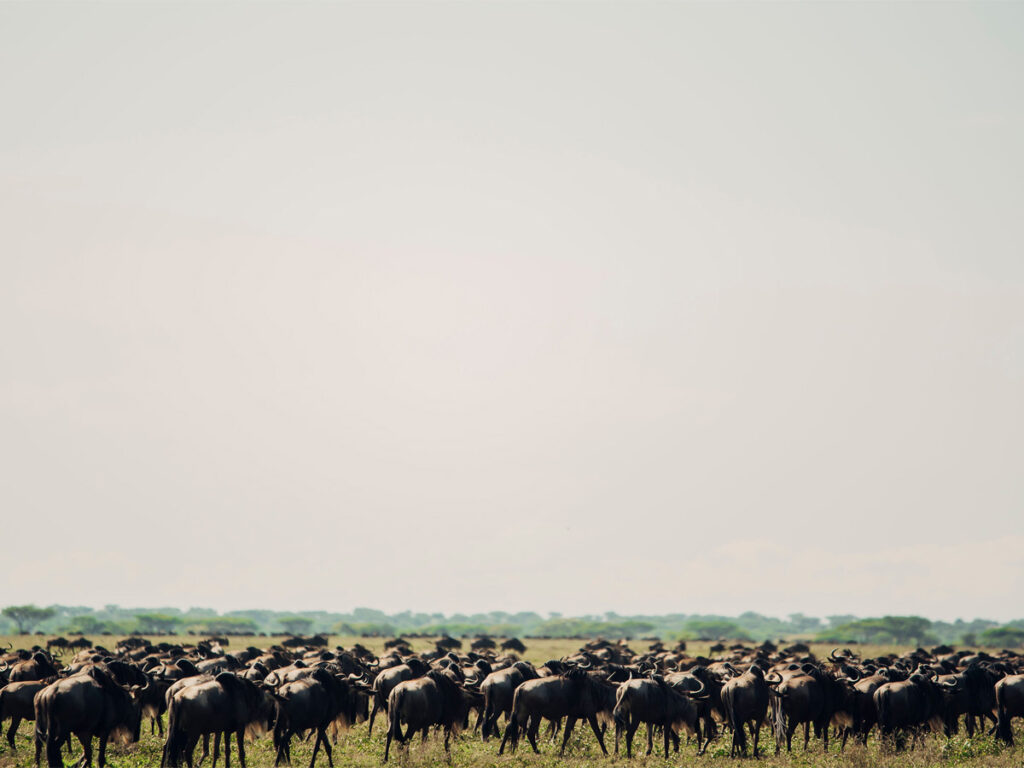
The Wildebeest Migration in Africa also known as the Gnu Migration, being one of the “Seven Natural Wonders of Africa”, is one of the last mass terrestrial wildlife movements left on the planet. It’s the chief reason why so many travellers venture to Tanzania for a Migration safari, especially around mid year.
The Migration is one of nature’s greatest paradoxes: timing is absolutely vital, but there is no way to predict the timing of the animals’ movements. We know that the wildebeest (and a smattering of zebra and antelope) will cross the Mara River but nobody knows exactly when. We also know that rain will trigger the wildebeest to move onto fresh grazing but nobody knows exactly when the rain will fall.
Fortunately, we’ve been planning Wildebeest Migration safaris in Africa since 2021. We’ve helped thousands of travellers to be in the best possible place at the best possible time for the best possible price. If you’re looking for expert planning advice, look no further. We’ve compiled all our specialist tips in this handy beginner’s guide to a Wildebeest Migration safari
The Great Wildebeest Migration is the largest animal migration in the world, with almost two million animals crossing the Tanzania plains each year.
Although named after wildebeests, which make the majority of animals, the migrating heards also include zebras, topi, gazelles, and other animals.
The migration typically begins in December and lasts until November, although its beginning depennds on the start of the rainy season in Tanzania.
The heards cover approximately 1,000 kilometers during the migration cycle.
Up to 250,000 wildebeests are killed by predators during the migration.
Migrating wildebeests divide into heards of hundreds of thousands of animals.

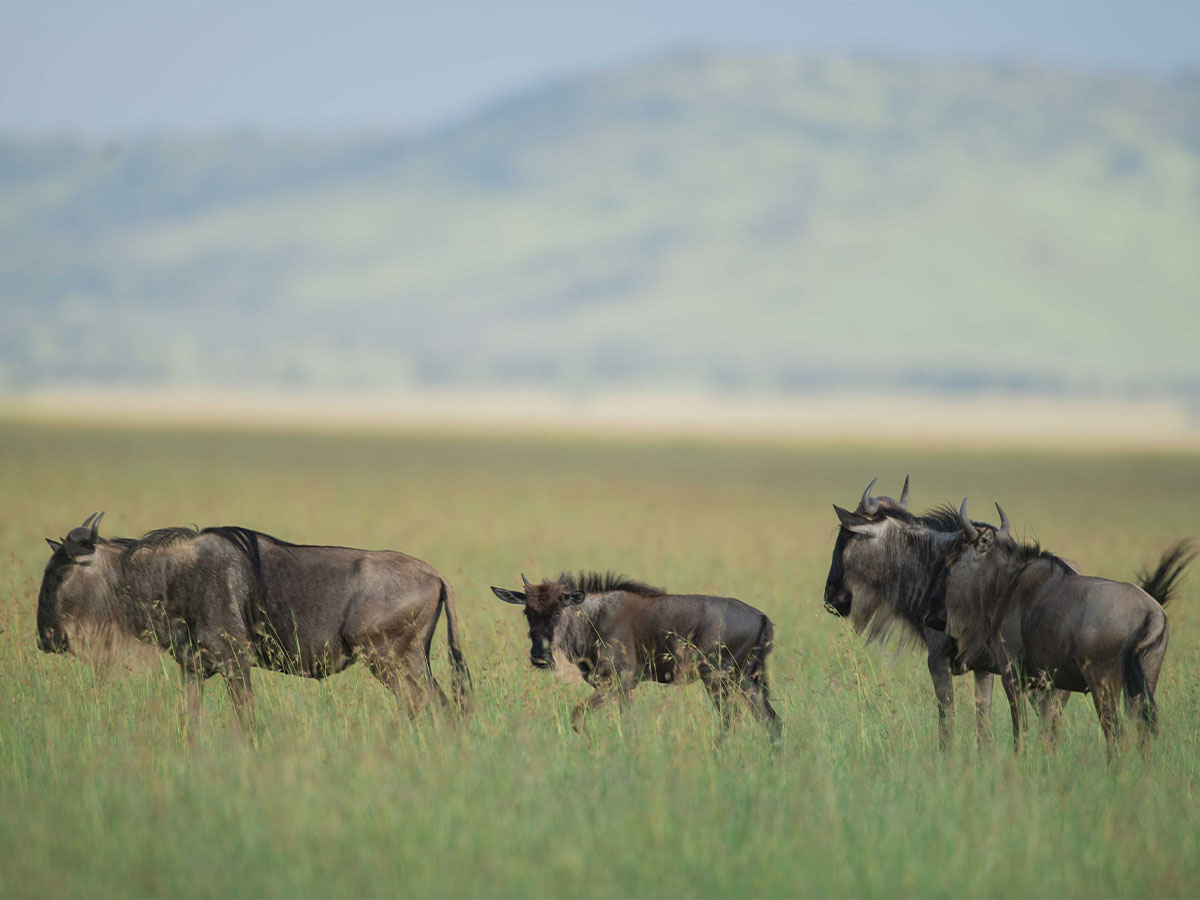
No, not even the wildebeest know when they’re going to cross! Some arrive at the water and swim over immediately; some arrive and spend days hanging around grazing; some arrive and turn back to where they came from. We wish we could predict the crossings, but no one can. This is why it is best to have as much time on safari as possible if you hope to see a river crossing.
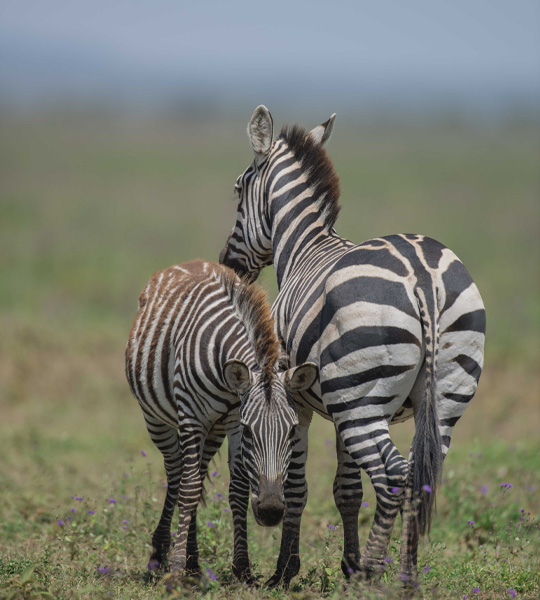
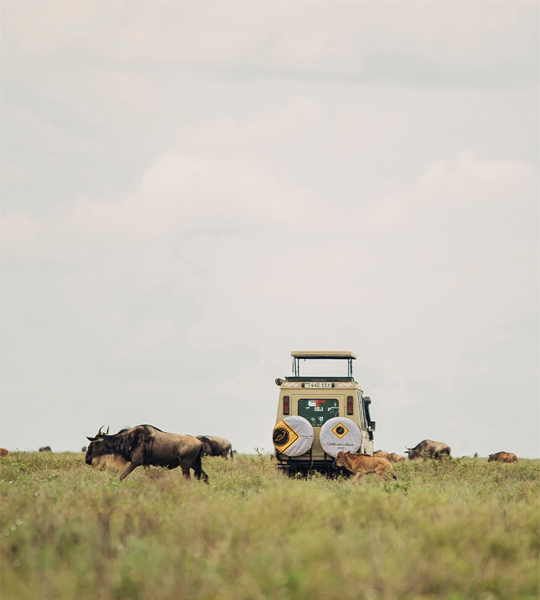
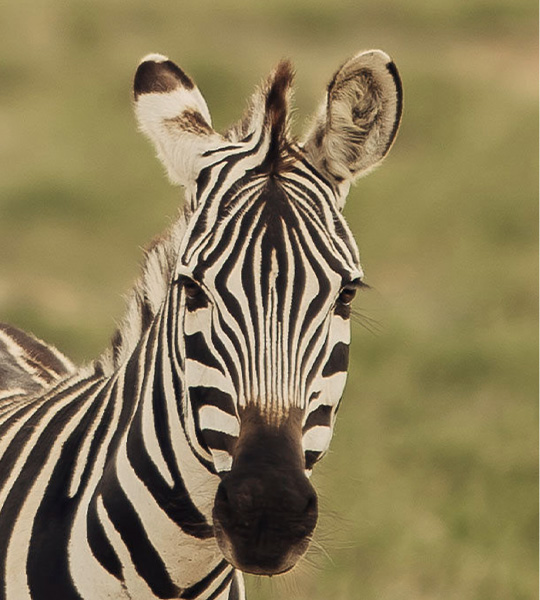
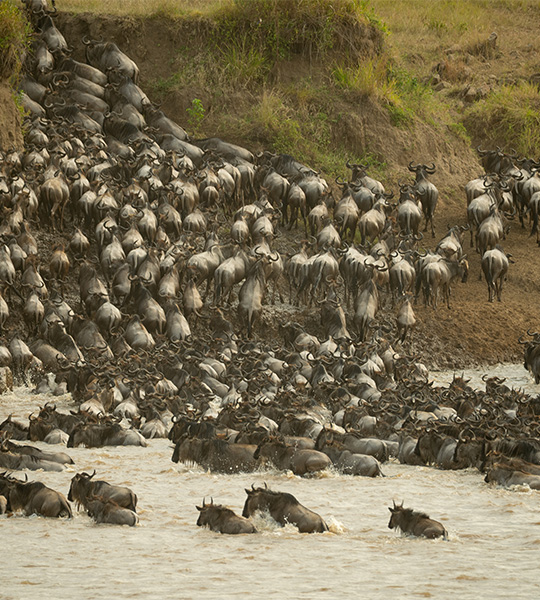
Most people think that the Wildebeest Migration only takes place between July and October, but it’s actually an ever moving, circular migration with various but equally exciting events that occur year round. The popular river crossings usually coincide with safari’s high season (June to October), hence the perception that this is the only time of the year that the wildebeest are on the move or can be seen.
Because the Great Migration is a fluid, year-round movement of about two million animals across the Serengeti Mara ecosystem, there are no defined start or end points. The Gnu Migration is triggered by East Africa’s rains and the animals follow an age-old route in search of fresh grazing and water. This epic journey takes the wildebeest across the Masai Mara plains in Kenya, all the way south into Tanzania’s Serengeti and the edge of the Ngorongoro Crater, before circling up and around in a clockwise direction.
Breaking down the migration location further, in below table, you can find the expected location, week by week.
MONTH | MIGRATION |
Early January | Ndutu and South Serengeti |
Mid January | Ndutu and South Serengeti |
Late January | Ndutu and South Serengeti |
Early February | Ndutu and South Serengeti |
Mid February | Ndutu and South Serengeti |
Late February | Ndutu and South Serengeti |
Ealy March | Ndutu and South Serengeti |
Mid March | Ndutu and South Serengeti |
Late March | Ndutu and South Serengeti |
Early April | Ndutu, South & South-West Serengeti |
Mid April | South & South-West Serengeti |
Late April | South-West Serengeti |
Early May | South-West and West Serengeti |
Mid May | South-West and West Serengeti |
Late May | West Serengeti |
Early June | West Serengeti |
Mid June | West and Central Serengeti |
Late June | West and/or North-West Serengeti |
Early July | West and/or North-West Serengeti |
Mid July | North-West Serengeti |
Late July | North-West Serengeti and Masai Mara |
Early August | North-West Serengeti and Masai Mara |
Mid August | North Serengeti and Masai Mara |
Late August | North Serengeti and Masai Mara |
Early September | North Serengeti and Masai Mara |
Mid September | North Serengeti and Masai Mara |
Late September | North Serengeti and Masai Mara |
Early October | North-East Serengeti and Masai Mara |
Mid October | North-East Serengeti and Masai Mara |
Late October | North-East Serengeti |
Early November | Along Eastern Serengeti |
Mid November | East Serengeti – Central |
Late November | East Central and South East Serengeti |
Early December | East Central and South East Serengeti |
Mid December | South East Serengeti and North Ngorongoro |
Late December | South East Serengeti, Ndutu, and North Ngorongoro |
The Shira route is similar to the Lemosho route but begins at a higher elevation. Because of this high starting point, the Kilimanjaro success rate on the Shira route is lower than on the Lemosho route. Shira’s success rate ranges from 60 to 80 per cent, depending on the itinerary length.
The Shira route is a six- to eight-day trip. There is also a shorter form lasting 3-4 days. The shorter variation has a lower success rate due to the shorter acclimatisation time.
Shira is suited for climbers with previous high-altitude experience. Climbers are driven to the Shira Plateau before commencing the trek, allowing for a less gradual acclimatisation at the start. Without prior trekking experience, rapid ascent can lead to altitude sickness.
With climate change, the long and short rainy seasons in Tanzania and Kenya are no longer as regular or predictable as they once were. The rains can be late or early, which will throw the whole wildebeest calendar out of synch. This is, once again, why it’s important to plan for as much time on safari as possible. You cannot fly in for two nights, see a river crossing and fly out again nature simply doesn’t work that way.
This is a very general guideline for where the herds are during the year bearing in mind that the entire Gnu Migration is triggered by rain, which can be early, late or on time:
In January, the herds are in Tanzania’s Serengeti National Park, moving south from the north-east region and into the area near Lake Ndutu. The Serengeti is not fenced, so the herds are free to move where they can find grazing. Remember that although up to two million wildebeest, zebra and antelope form the Serengeti Migration, they are not all in a single herd. The animals break up into mega herds of thousands or hundreds of individuals at time.
From February to March, it is calving season (over 8 000 wildebeest babies are born each day!) so prepare yourself for lots of wobbly calves… and lots of heartbreak as fearsome predators swoop in. The Serengeti’s big cats take the lion’s share, but hit and run jackals, packs of wild dog, and hyena clans add to the spectacle. It’s a bittersweet ballad; the circle of life played out as a live action drama.
If the short rainy season (Nov–Dec) produced good grazing, the herds feed frenziedly and remain in the Serengeti’s southern plains until they slowly start moving west in March.
In April, it’s the start of the long rains (Apr–May) and the herds generally move in a north westerly direction towards the Moru and Simba Kopjes. The action packed rutting (breeding) season is in full swing, featuring testosterone-fuelled jousts between males competing for the right to mate with receptive females.
In May, wagons roll! The massed herds are on the go, huge columns of up to 40 kilometres (25 miles) in length can sometimes be seen as the wildebeest funnel up into the central Serengeti. Everyone’s moving a little quicker now that the calves are stronger.
From June, the wildebeest are usually in the central Serengeti and getting ready for the toughest part of their odyssey. The herds may have split up, with some already crossing the Grumeti River.
In July, the Great Migration have reached the Grumeti region and northern parts of the Serengeti and are peering closely at the treacherous waters of the Mara River they have to cross into Kenya. Why? Huge Nile crocodiles, that’s why!
As mentioned, it is impossible to accurately predict river crossings they depend entirely on the rains and the often unpredictable wildebeest themselves. It’s vital to book your Wildebeest Migration safari in Africa up to a year in advance to get a lodge on or as close to the river as possible this cuts down on travel time to lookout points. The wildebeest do have historical crossing areas and you may spend days staked out in the hope of seeing the action. We recommend choosing a mobile safari camp that moves with the Migration to ensure you’re in the right place at the right time.
August is generally considered the best time to witness the dramatic river crossings from the northern Serengeti into the Masai Mara. You’ll need a passport to cross into Kenya; the wildebeest are exempt. The Masai Mara National Reserve is open to members of the public so for a more exclusive safari experience, head for the private consevacies that are contiguous with the reserve.
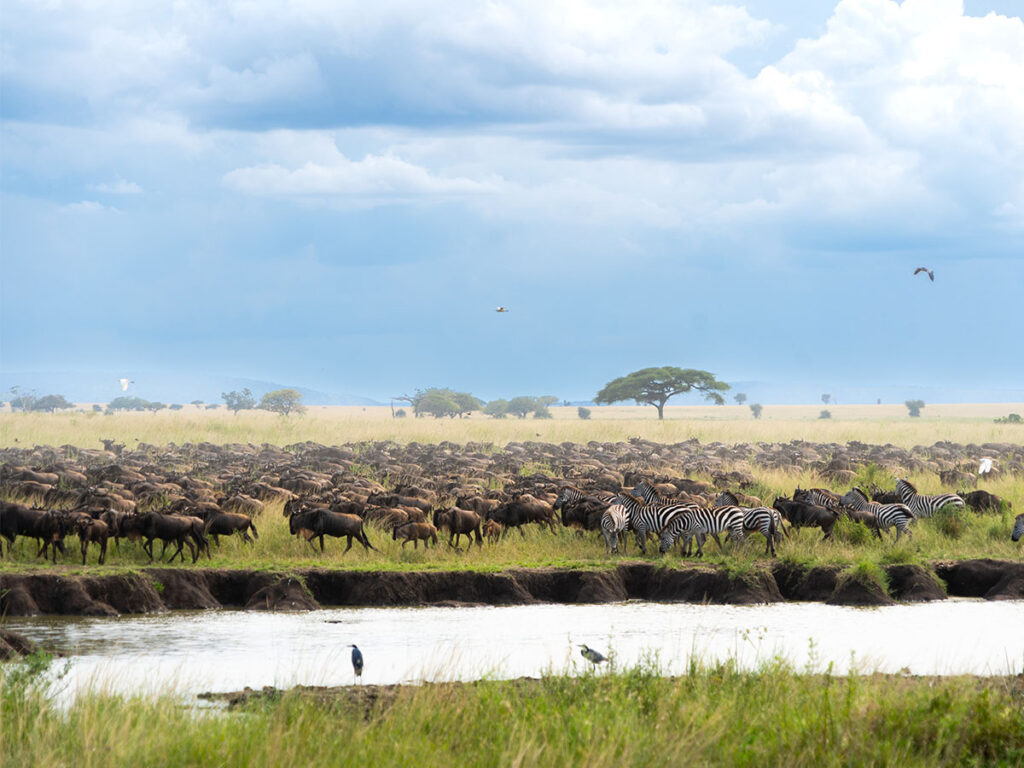
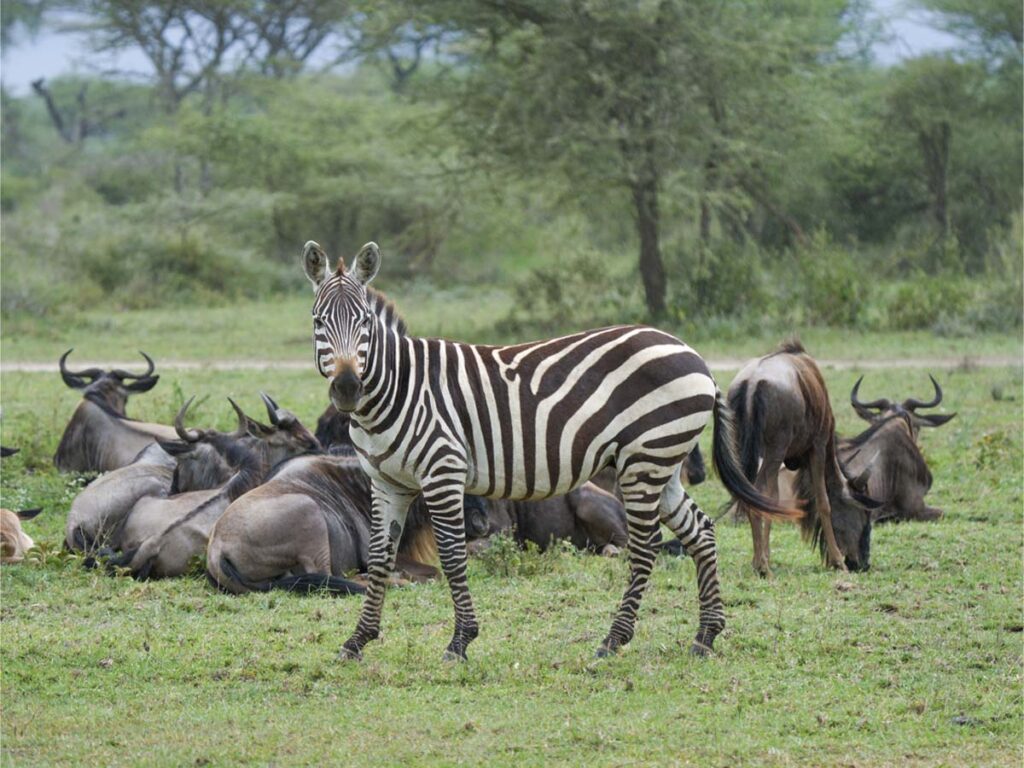
In September, the herds break up into smaller groups, as not all the wildebeest migrate into Kenya. Less than half of the animals remain in the northern Serengeti, the rest are swapping war stories in the Masai Mara. So you could still see wildebeest in the Serengeti (just not the mega-herds) but as a general rule of thumb, the Masai Mara is the best place to witness the Migration in September.
From October, your best bet is still the Masai Mara, but bear in mind it is a far smaller reserve than the Serengeti and there may be a lot of other visitors. The neighbouring private conservancies are much less crowded and, not only will you still be able to witness the Migration, you will also directly contribute to the Maasai communities who have lived there for thousands of years. Plus you can enjoy off-road game viewing, night drives and walking safaris activities not permitted in the national reserve.
In a ‘normal year’ in November the short rains have begun, propelling the wildebeest to leave the now denuded grasslands of the Masai Mara and head back into the rejuvenated Serengeti. Bear in mind that the rain can be late or early, which is also unpredictable.
The herds are generally on the move, but can be seen around the north eastern parts of the Serengeti where they may split into smaller groups for their journey southward.
Tip: although many people think of Africa as a hot place, the rain can cool things down dramatically. You’ll be out on early morning and late afternoon game drives the sun is at its weakest during these times. Take at least one pair of trousers, closed shoes that can cope with mud, and a fleece or waterproof jacket.
In December, fresh grazing sees the wildebeest move south, covering the northern and eastern Serengeti to feast and prepare for yet another death-defying, 3 000-km (1 900-mi) odyssey.
Now that you know how the Great Wildebeest Migration in Africa works, you can easily see that the best time to go depends entirely on which events you’re personally interested in seeing. Remember, the Serengeti and Masai Mara’s abundance of wildlife and wide open landscapes make them fantastic year round safari destinations.
PERIOD | LOCATION | EVENT |
Late December to March | South Serengeti and Ndutu | Calving: This season sees the herds giving birth to around 500,000 calves. Major part of calving occurs between Mid Jan to Feb. This abundance of prey attracts predators and leads to an intense predator-prey interaction. |
April | South-West Serengeti | Moving Northward: Once the calves gain some strength, the migration follows the rains northwards. This is also the beginning of Mating season. |
May and June | West and Central Serengeti | Mating & River Crossings: Mating continues in May as herds move into West Serengeti and by June they start to cross the Grumeti river. These are not as dramatic as the crossings in the North. By the end of June herds start moving North. |
July to October | North Serengeti and Masai Mara | River Crossings: Herds move into North and face their major hurdle – Mara river, which they need to cross to access greener pastures. River crossing is a spectacular sight with dramatic scenes of crocodiles hunting and wildebeest drowning. |
November to Mid December | East-Central Serengeti | Moving Southward: After grazing on the greener pastures of North Serengeti and Masai Mara, the herd follows rains back into Central & Eastern Serengeti, on their way to reach the calving grounds in the south. |
Note: the above are approximate dates only. The Wildebeest Migration is a year-round, circular journey and the river crossings cannot be predicted. Sometimes the herds stay put for two weeks, other times they could cross four times in one day!
Migration camps or lodges in Ndutu: Tanzania Bush Camps – Ndutu, Sero tented camp – Ndutu, Ndutu migration Canopy, Heritage migration camp- Ndutu, Ang’ata Migration Camp – Ndutu, Nyikani Migration Camp – Ndutu, Ndutu Lodge, Ndutu Luxury Tented Lodge, Lake Masek Tented Lodge, Serengeti Under Canvas – Ndutu, Olakira Migration Camp – Ndutu
Camps or Lodges in South Serengeti: Kati Kati Migration Camp, Ndutu Under Canvas, Sanctuary Kichakani Serengeti Camp
Accommodations Near Near Moru Kopjes: Osupuko Serengeti Camp, Golden safari camp, Naona Moru Camp, Asanja Africa, Ole Serai Moru Kopjes, Dunia Camp, Elewana pioneer camp
Accommodations in West Serengeti: Kirawira Serena Lodge, Mbalageti Lodge, Mbugani Migration Camp, Serengeti Safari Camp, Grumeti Serengeti River Lodge
Accommodations in North Serengeti near Mara river: Tanzania Bush camps – migration camp, Heritage Serengeti Camps – migration camp, Kati Kati Migration Camps, Mara Under Canvas, Nyikani Migration Camp, Lemala Kuria hills, Sayari Camp.
Accommodations in North Serengeti on Eastern Side: Ang’ata Migration Camp, Mbugani Migration Camp, Serengeti Baobab – Migration Camp, Bologonja Under Canvas, & beyond Kliens Camp.
Accommodations in Lobo Region: Kimbilo Safari camp, Lobo Wildlife Lodge, Elewana Serengeti camp
Accommodations in East Serengeti: Mawe Camp, Serenity camp, Sametu Camp, Lemala Nanyukie, Namiri plains.
Ready To Plan Your Migration Safari?
Places to visit: Tarangire, Serengeti and Ngorongoro
Places to visit: Tarangire, Materuni and Ngorongoro
Don’t worry! If you can’t find a tour that matches your preferences, our team of experts is here to help. Simply contact us, and we’ll craft a personalized itinerary designed around your interests, schedule, and budget.