Authentic Tanzania Safari & Mount Kilimanjaro Experts
Authentic Tanzania Safari & Mount Kilimanjaro Experts
The 8 Days Lemosho Route safari-style trek is widely considered the best balance of scenery, acclimatization, and summit success on Kilimanjaro. Starting from the western rainforest, this route gradually ascends through multiple ecological zones, giving trekkers more time to adjust to altitude.
Unlike shorter routes, the 8 Days Lemosho Route safari allows climbers to experience the mountain at a comfortable pace, significantly improving summit success rates. The journey passes through dense rainforest, moorland valleys, alpine deserts, and finally the icy summit zone of Uhuru Peak.
This route is perfect for adventure travelers who want a quieter trail, breathtaking scenery, and a more immersive climbing experience.
Choosing the 8 Days Lemosho Route safari is ideal for climbers who want:
This route is recommended for both first-time climbers and experienced trekkers looking for a premium mountain experience.
During your 8 Days Lemosho Route safari, expect a progressive altitude climb with changing ecosystems each day.
You will experience:
Each day is carefully planned to balance trekking distance and altitude gain for safety and success.
Your climb includes:
Safety is a top priority throughout the entire 8 Days Lemosho Route safari.
The 8 Days Lemosho Route safari uses high-quality mountain tents designed for safety and comfort.
You can expect:
Every camp is set in scenic wilderness locations for a true mountain experience.
The 8 Days Lemosho Route safari is specifically designed for better acclimatization, which significantly improves summit success rates on Mount Kilimanjaro.
Because the itinerary climbs gradually, your body has more time to adjust to thinning oxygen levels. This “climb high, sleep low” structure reduces altitude sickness risk and makes the 8 Days Lemosho Route safari one of the safest Kilimanjaro routes.
One of the biggest reasons climbers choose the 8 Days Lemosho Route safari is its high summit success rate (up to 85–90%).
Compared to shorter routes, the extra day allows:
This makes the 8 Days Lemosho Route safari ideal for both beginners and experienced trekkers.
8 Days | 7 Nights
Lemosho Route
2 Pax Min
Hiking time: 3–4 hours
Distance: ~6 km
Altitude gain: +550m
Acclimatization: Easy start, gradual ascent
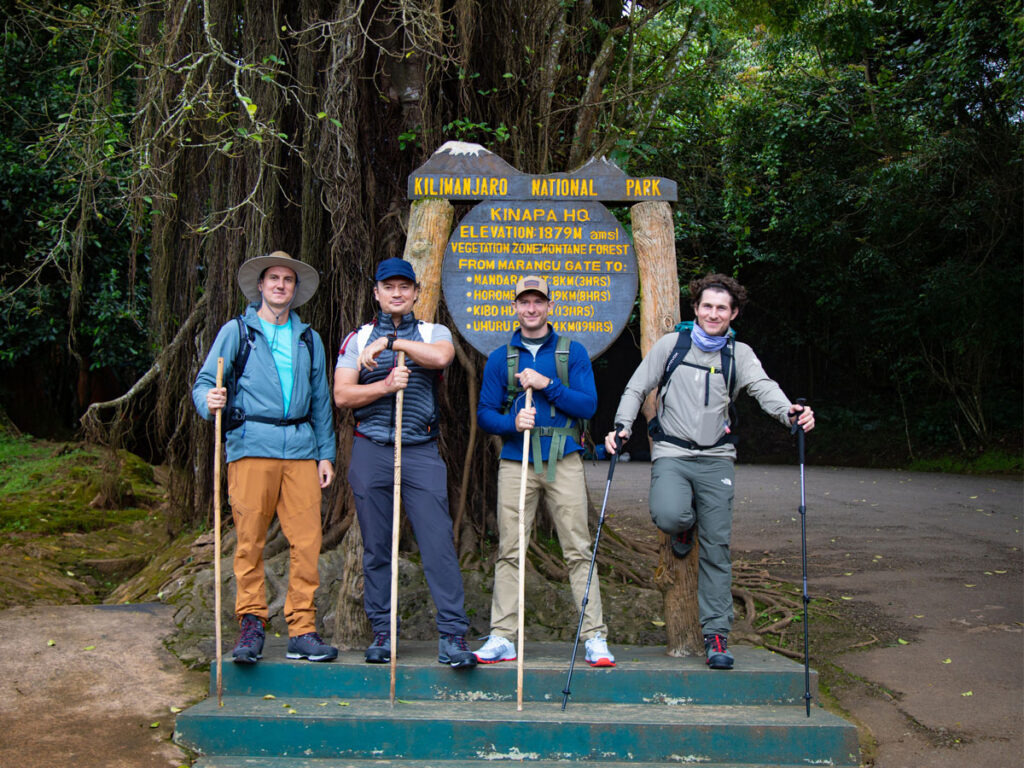
Your adventure begins at Lemosho Gate after registration and briefing. The trek starts through dense rainforest, one of the most biologically rich zones on Kilimanjaro. The trail is shaded, humid, and alive with sounds of birds and colobus monkeys. The slow pace on this first day is intentional, allowing your body to gently begin adapting to altitude without strain.
The path can be muddy and slippery, especially during the rainy season, but the gradual incline makes this a comfortable introduction. By the time you reach Mti Mkubwa Camp (“Big Tree Camp”), you’ll already feel immersed in the mountain environment. Proper hydration and slow walking (pole pole) are emphasized from the very beginning as part of your acclimatization strategy.
Hiking time: 5–6 hours
Distance: ~8 km
Altitude gain: +850m
Acclimatization: Moderate gain, steady pace
You leave the rainforest behind and transition into the heather and moorland zone. Vegetation becomes thinner, replaced by giant heathers and volcanic rock formations. The trail steepens slightly, and you’ll notice the air becoming cooler and drier.
This is your first significant altitude gain, so guides will enforce a slow trekking rhythm to help your body adjust. As you approach Shira Plateau, the landscape opens dramatically, offering your first clear views of Kibo peak. The wide, open plateau allows your body to adapt while trekking at moderate altitude, an important step in reducing the risk of altitude sickness.
Hiking time: 3–4 hours (+ optional acclimatization hike)
Distance: ~7 km
Altitude gain: +350m
Acclimatization: Active acclimatization day
This is a shorter trekking day designed specifically for acclimatization. You cross the Shira Plateau, one of the highest plateaus in the world, with stunning panoramic views. The terrain is relatively gentle, allowing your body to adjust to the increasing altitude without excessive fatigue.
In the afternoon, an optional acclimatization hike is strongly recommended typically ascending a few hundred meters above camp and then descending back. This “climb high, sleep low” approach is one of the most effective acclimatization techniques, helping your body produce more red blood cells and adapt to lower oxygen levels.
Hiking time: 3–4 hours (+ optional acclimatization hike)
Distance: ~7 km
Altitude gain: +350m
Acclimatization: Active acclimatization day
This is a shorter trekking day designed specifically for acclimatization. You cross the Shira Plateau, one of the highest plateaus in the world, with stunning panoramic views. The terrain is relatively gentle, allowing your body to adjust to the increasing altitude without excessive fatigue.
In the afternoon, an optional acclimatization hike is strongly recommended typically ascending a few hundred meters above camp and then descending back. This “climb high, sleep low” approach is one of the most effective acclimatization techniques, helping your body produce more red blood cells and adapt to lower oxygen levels.
Hiking time: 6–7 hours
Distance: ~10 km
Altitude gain: +780m up, then descent
Acclimatization: Critical “climb high, sleep low” day
This is one of the most important days for acclimatization. You ascend steadily to Lava Tower, reaching over 4,600m. At this altitude, many trekkers feel mild symptoms like headaches or fatigue, which is normal and part of the acclimatization process.
After spending some time at Lava Tower, you descend to Barranco Camp. This descent is crucial it allows your body to recover while still benefiting from the high-altitude exposure. Barranco Camp sits in a scenic valley below the Barranco Wall, surrounded by giant senecio plants. This day significantly increases your chances of summit success.
Hiking time: 4–5 hours
Distance: ~5 km
Altitude gain: +75m (with ups and downs)
Acclimatization: Continued adaptation
The day begins with the famous Barranco Wall a steep but non-technical climb that may look intimidating but is manageable with guidance. Reaching the top rewards you with breathtaking views and a strong sense of achievement.
Afterward, the trail undulates through valleys and ridges before reaching Karanga Camp. Though the net altitude gain is small, the constant ups and downs contribute to acclimatization. This shorter day allows your body to rest and adjust before heading to higher elevations.
Hiking time: 3–4 hours
Distance: ~4 km
Altitude gain: +605m
Acclimatization: Final preparation for summit.
You hike steadily to Barafu Camp, located on a rocky ridge. The environment here is harsh cold, dry, and exposed, with little vegetation. This is your final camp before the summit attempt.
Upon arrival, you’ll rest, hydrate, and eat an early dinner before preparing for the midnight ascent. Although the hike is short, the altitude makes it physically demanding. Proper rest and mental preparation are key, as summit night will be the most challenging part of the climb.
Hiking time: 10–14 hours
Distance: ~17 km
Altitude gain: +1,255m up, then -2,795m down
Acclimatization: Summit push and rapid descent.
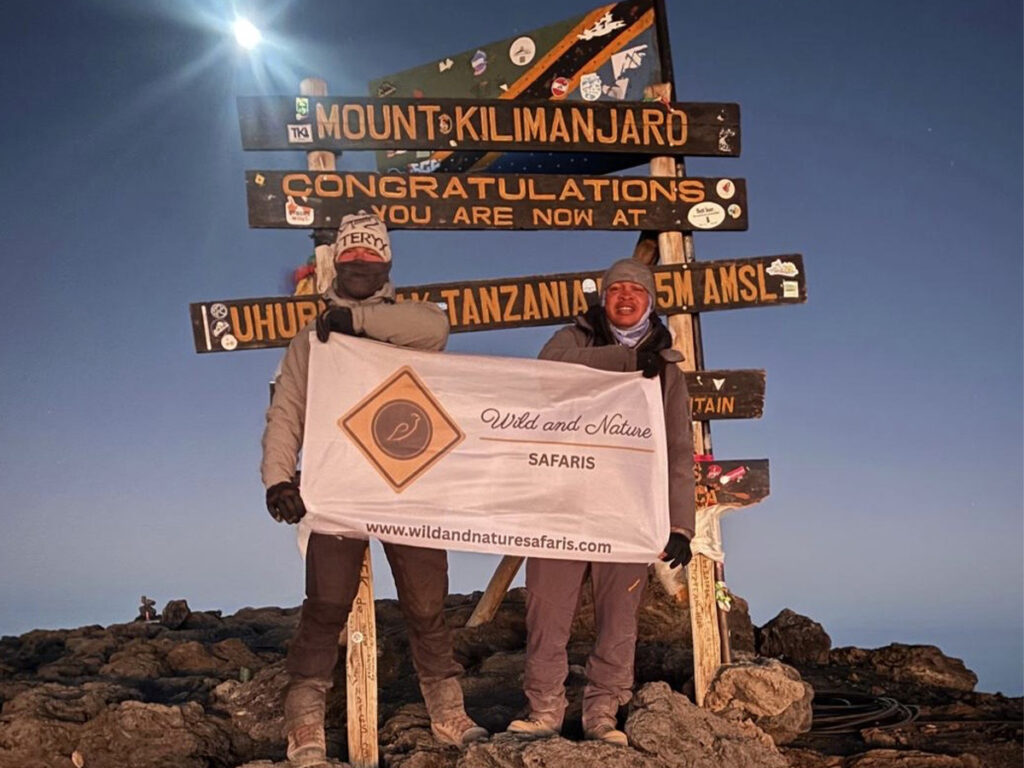
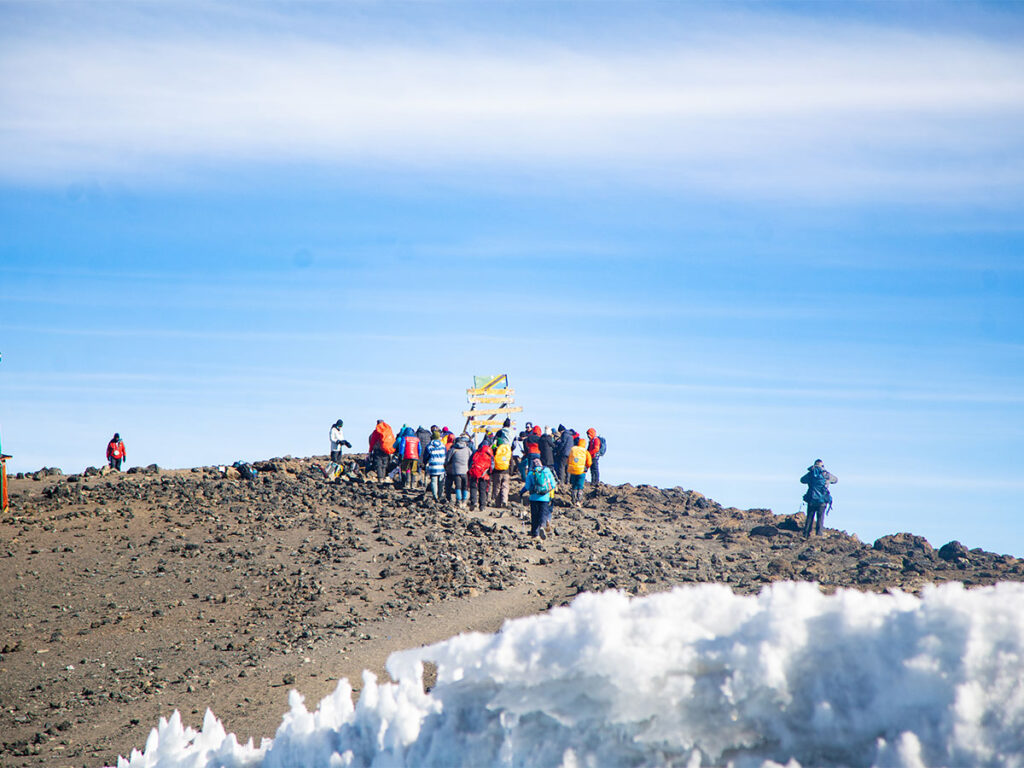
You begin your summit attempt around midnight, trekking in darkness under a cold, star-filled sky. The climb is steep and slow, with frequent breaks. Reaching Stella Point at sunrise is a major milestone, followed by a gradual walk to Uhuru Peak the highest point in Africa.
After celebrating at the summit, you descend back to Barafu Camp for a short rest, then continue down to Mweka Camp. The descent is long and physically demanding, but the increase in oxygen makes breathing easier. This is the most exhausting yet rewarding day of the entire trek.
Hiking time: 3–4 hours
Distance: ~10 km
Altitude loss: -1,460m
Acclimatization: Return to low altitude.
Your final day is a gentle descent through the rainforest. The trail can be muddy, but the rich greenery and fresh air provide a refreshing contrast to the alpine desert above.
At Mweka Gate, you receive your summit certificate and celebrate your achievement. This marks the successful completion of your journey on Mount Kilimanjaro a trek that not only tests physical endurance but also rewards with unforgettable landscapes and personal accomplishment.
Don’t worry! If you can’t find a tour that matches your preferences, our team of experts is here to help. Simply contact us, and we’ll craft a personalized itinerary designed around your interests, schedule, and budget.